Lennie Little-White is ready to teach
Loading article...
-
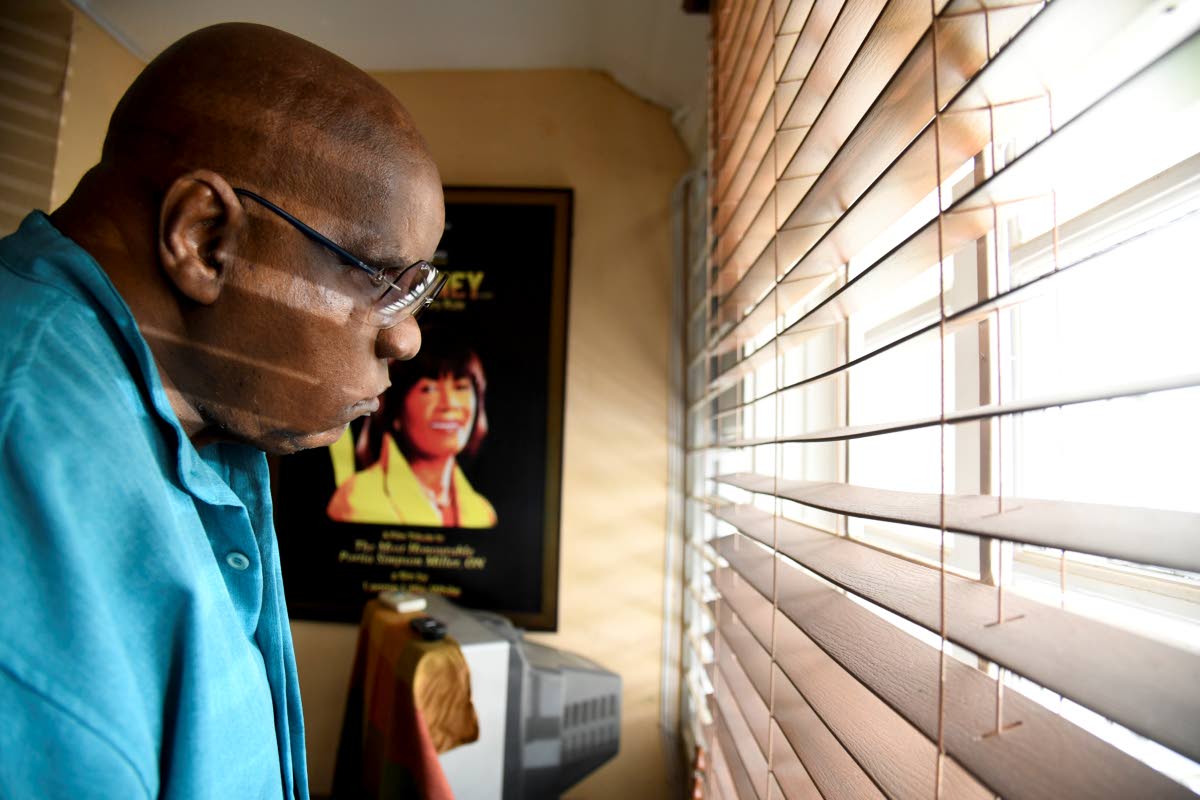 Among Little-White’s documentary credits is ‘Journey: Break Every Rule’, the 2019 biographical film honouring former Prime Minister Portia Simpson Miller.
-
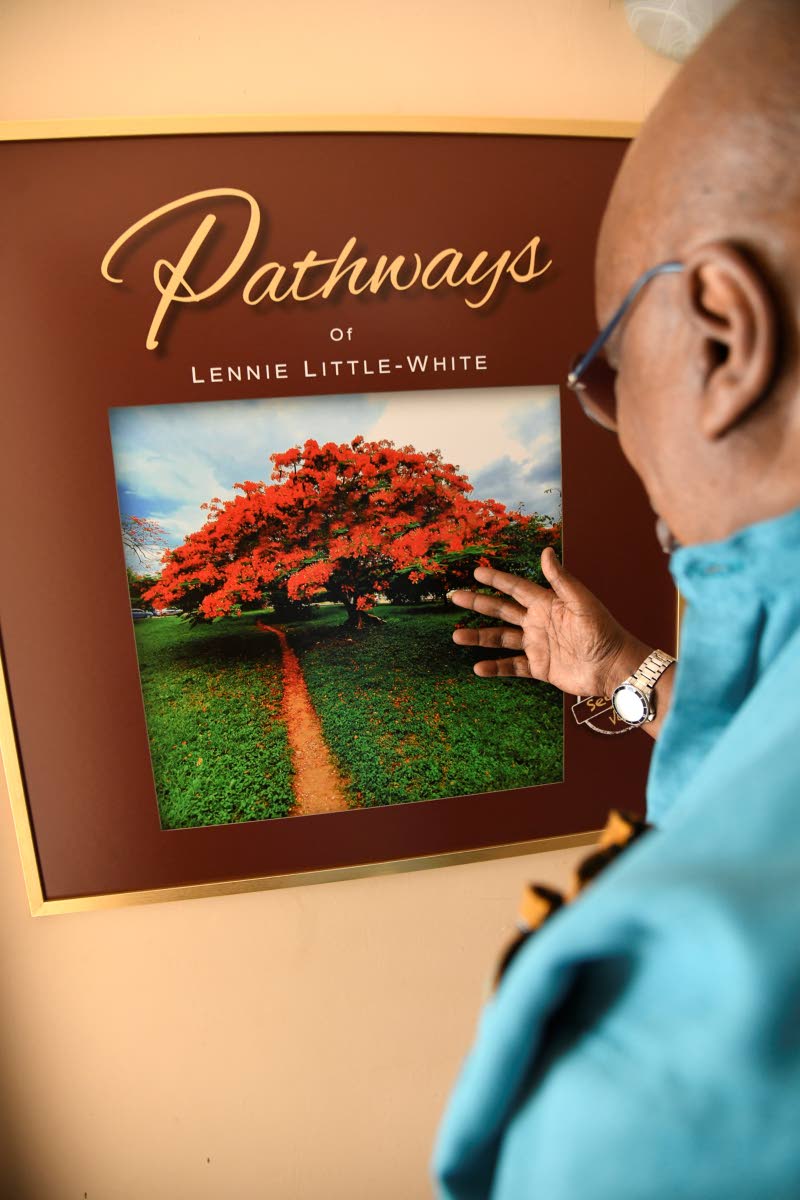 Blending photography and poetry, ‘Pathways’ is Lennie Little-White’s first published book and reflects his growing passion for literary and visual art.
-
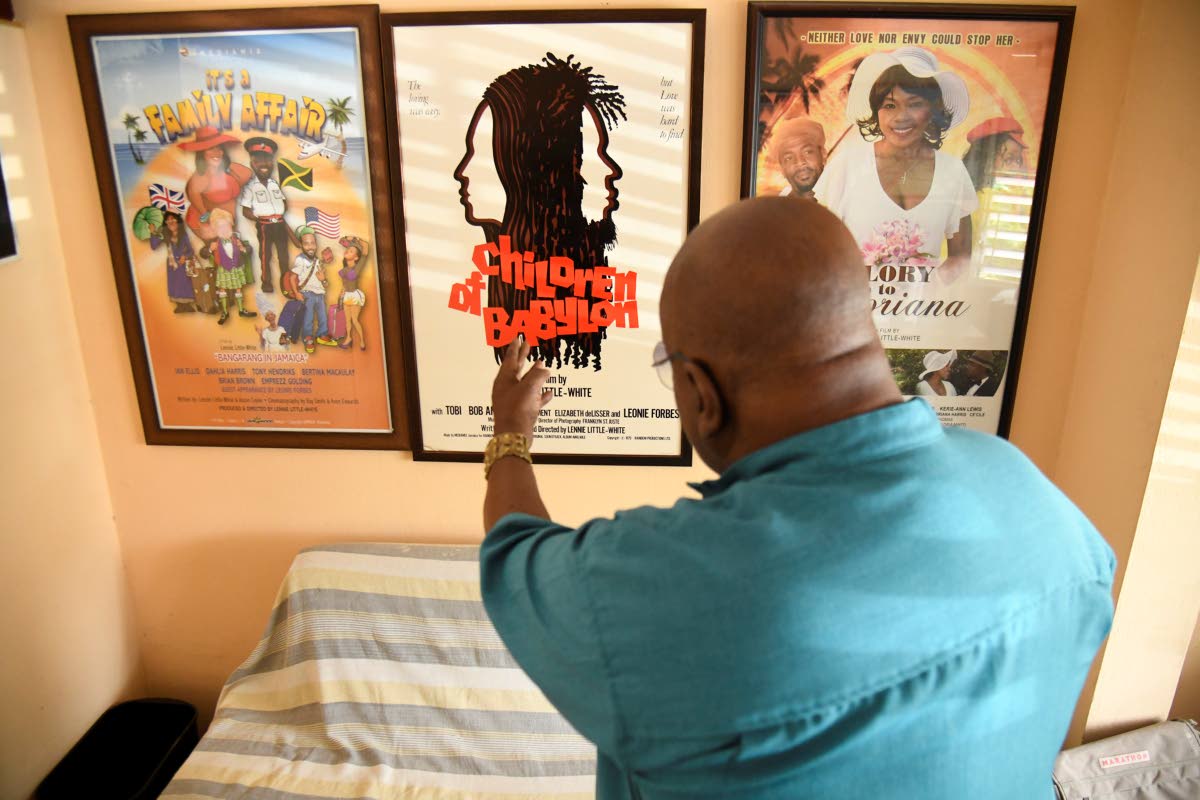 ‘Children of Babylon’ (1980), written, produced and directed by Lennie Little-White, which is among the works that cemented his place in Jamaica’s film industry.
-
 Jamaican film industry pioneer Lennie Little-White hopes to pass on more than five decades of filmmaking knowledge to the next generation while continuing work on new documentary projects.
When Lennie Little-White completed his first degree, his mission was to teach. However, his good friend Rex Nettleford encouraged him to do a second degree and return to Jamaica and lecture at the soon-to-be-opened Caribbean School of Media and Communication (CARIMAC), as he would earn a higher salary. He did, but when he returned home, CARIMAC had not yet opened. That’s when Nettleford encouraged him to start his own business, and the pioneering Jamaican film and television production company, Mediamix, was born.
After a lifetime spent learning, the film industry pioneer is ready to pass on his vast knowledge to those who will benefit from it. Little-White still has a project or two that he wants to complete – the Jimmy Cliff documentary, for example, and that’s particularly special to him since Cliff was his cousin and they got along very well. Next is the Louise Bennett-Coverley documentary, which would complete the features on iconic Jamaicans. The first two in that [iconic Jamaicans] series are Long Live the King, on Rex Nettleford, and They Call Me Barrington, on Barrington Watson. But, these days, he’s more into manipulating words on a canvas and then signing off these poetic gems with a satisfied flourish: “ Lennie sey suh”.
“I want to teach them all that I know,” Little-White told The Sunday Gleaner. And that’s a lot. That is more than half a century’s worth of knowledge. Little-White wrote, produced and directed the film, Children of Babylon (1980); he was the driving force behind the hit television drama, Royal Palm Estate, which premiered in March 1994 and became a “cultural phenomenon across the Caribbean”, spanning 31 seasons. He produced Glory to Gloriana (2006) and It’s a Family Affair (2016), as well as numerous documentaries, advertisements, and anything and everything film-related.
Little-White is keen for filmmakers to understand exactly what they are up against both locally and globally. He wants them to comprehend the many layers involved in the business, including who the gatekeepers are in the various territories, which familial relationships run deeper than blood, and how to navigate taboo topics such as homosexuality in the business, because “we cannot afford to be culturally naïve”.
On the local scene especially, Little-White wants filmmakers to know why, for example, “there will never be another Royal Palm Estate”.
“I and three guys formed CVM, and that’s how Royal Palm could get on television. Having Mediamix and being the ‘M’ in CVM, I had a little bit of leverage in that I didn’t have to pay CVM to air Royal Palm Estate,” Little-White explained of the series, which he later licensed, and which ran in 17 countries across the Caribbean for many years.
As a filmmaker, he would like to see a world in which the government mandates that a certain number of hours must be made available to local television series/films to be aired free of cost. He pointed out that this is what the Canadian government did years ago and energised its own film industry.
DOMESTIC MARKET
In the interview with The Sunday Gleaner, Little-White highlighted the importance and complexities of the domestic market. “Your film needs to break even in the domestic market. If you can’t break even in your domestic market, it’s a waste of time. I call it creative masturbation,” he said. “A low-budget production can’t be done for under $20 million. When it goes into the cinema, you make roughly 20 cents on the dollar. Fifty cents out of every dollar goes to the cinema, and that is the standard globally. The distributor takes 25 cents … or sometimes 30 … on the dollar,” explained Little-White, who is one of the only Jamaican filmmakers to have three full-length films to his credit.
Giving some statistics on the North American market, he noted that, in 2025, 602 movies were released in the US and Canada; in 2024, 577 movies were put out; and, in 2023, there were 592 domestic releases. Research done on 175 films found 59.4 per cent made more than they cost. “So roughly six out of 10 US theatrical releases eventually break even when you include home entertainment, TV, and streaming – but far fewer do it on theatrical alone,” he explained.
He mentioned that, as far as Jamaican films are concerned, The Harder They Come “is the most critically successful indigenous Jamaican production, but, despite its tremendous success at home, this movie never made a profit nor even break even in its local exhibition”.
“At Palace, if the film is not making x amount per week, they pull it because they have to cover costs – light bill, the cleaners, security. If you are not covering their overheads after two weeks, they are going to pull it. In NY, LA or Boston, they have the smaller cinemas, and there is the university circuit. That’s where Harder They Come buss … in the universities.”
He shared that, when he did Children of Babylon in Toronto, it ran for 18 weeks. However, it moved from a 200-plus cinema until it ended up in a cinema with only 75 seats. “Palace can’t afford to have my film with 10 patrons in a cinema with 200 seats. They are a public company, they are on the stock market, they can’t afford to give my film six weeks … but that’s what it might need,” Little-White said.
He noted that Chris Blackwell, “who has the most international connections of anybody in Jamaica”, financed Dancehall Queen, The Lunatic, and Third World Cop, but he hasn’t done any more films.
“Why did he stop at Third World Cop? My theory is that the return on investment was not enough to justify him going in him pocket again. The average movie takes three years to make back its investment and five years to mek a profit. Blockbusters mek back money in a year. If I’m Chris Blackwell, why would I worry myself with ole naygah like Lennie Little-White … that’s a headache,” Little-White said with a hearty laugh.
MARKETING
Touching on the high value and importance of marketing, Little-White stated that in the film industry today, the norm is for every 60 cents you spend, you have to spend 40 cents for marketing. “Jamaican companies have tested the North American market and failed, mainly because they don’t understand the need for marketing. You don’t get a hit record in Jamaica because you have a nice voice; you have to talk to the announcer. Ask Bob Marley … Bob and dem had to go down the station and “influence” the announcer to play dem music,” he said with a smile, referring to a special moment in Jamaica’s music history.
“Vybz Kartel might not have to seek out and pay the influencers on TikTok and other platforms, or the disc jockeys and the selectors, but other entertainers have to do it. The filmmakers are in a parallel situation. Reggae music never took off until Chris Blackwell took it to London, and Chris Blackwell was one of the financiers of The Harder They Come. Similarly, we have to find a way to make Jamaican films take off in Birmingham, Brooklyn, Bronx, parts of Fort Lauderdale,” Little-White said.
Little-White suggested the boutique theatre concept, pioneered by the late Trevor Rhone, who co-wrote The Harder They Come.
“When Trevor came back to Jamaica having studied drama in England, he called me and said he cannot survive because he couldn’t afford to do a play in Jamaica. The only two places were The Ward and Little Theatre, so Trevor came up with the idea to form Barn Theatre … the mini theatre … and all of these small theatre producers are based on the Trevor Rhone formula. What we need are small cinemas in the communities across the island, where people can see the films or watch a play,” he said.
But Little-White is looking even beyond that.
“Cinema is not what I would recommend to a young filmmaker; the major area is streaming VOD – [video] on demand. That is where the industry is. Streaming has taken over the industry internationally, and you can get your film streamed at a lower cost; it [is] more convenient to viewers and the streaming companies do the marketing,” he said.
Armed with statistics, Little-White quoted that “74 per cent of US adults watched a new movie at home on streaming in the past year versus 66 per cent in theatres, and “in the Top 100 most-watched films on streaming, 66 per cent are direct-to-streaming originals”.
“Cinema is still critical for blockbusters like the Michael Jackson movie, but the trend is clear … two-thirds of the most-watched films on streaming in the last five years never had a wide theatrical release,” he said.
The top six streaming platforms worldwide by subscriber and reach are Netflix, Amazon, Disney+, Apple, HBO Max and Hulu.
yasmine.peru@gleanerjm.com