Editorial | Canada after Alberta
Loading article...
-
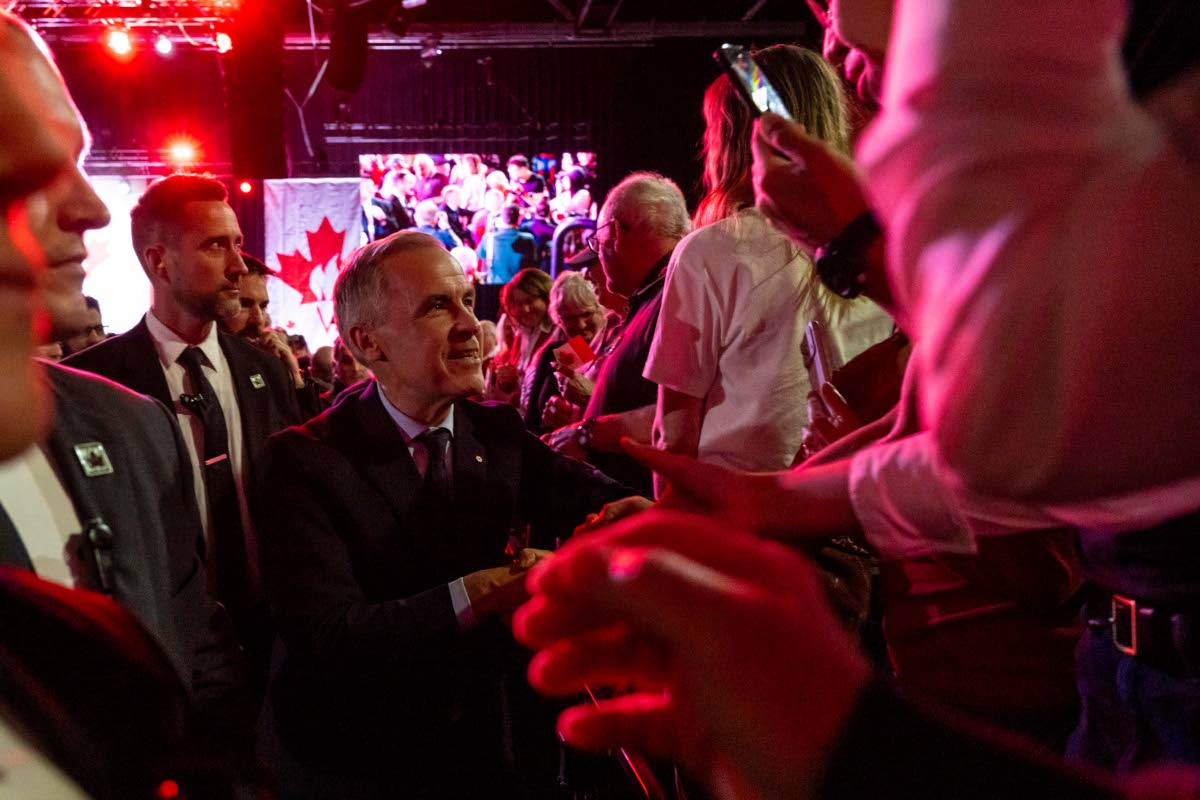 Canada’s Prime Minister Mark Carney, center, greets people at a Forever Canadian rally in Edmonton, on Friday, Oct. 16, 2026. Photo - AP
-
Canada’s Prime Minister Mark Carney, center, greets people at a Forever Canadian rally in Edmonton, on Friday, Oct. 16, 2026. Photo - AP
-
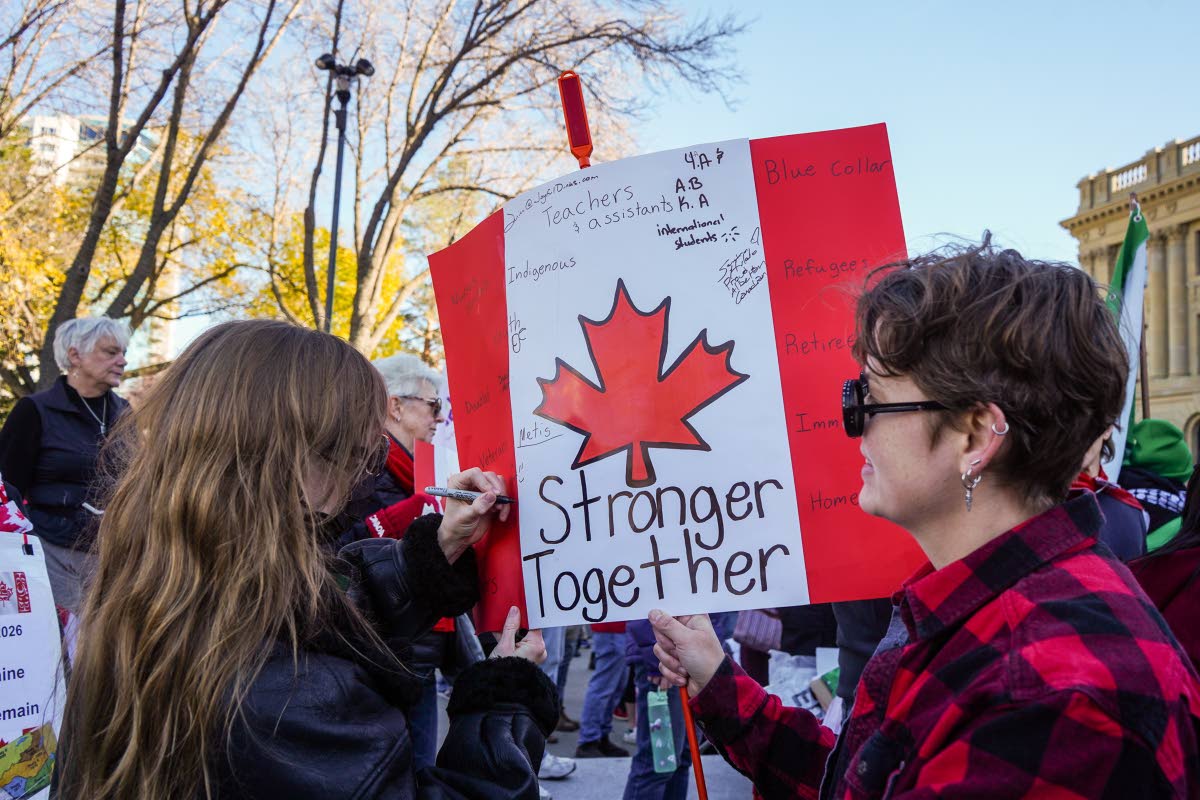 A supporter writes on a protest sign during a pro-Canada rally in Edmonton, Alberta, Sunday, Oct, 18, 2026. Photo - AP
-
 Supporters wait for results at the pro-Canada watch party in Edmonton, Alberta Monday, Oct. 19, 2026. Photo - AP
This week’s emphatic declaration by Albertans that they want to remain in Canada was a good outcome for Prime Minister Mark Carney as he attempts to reframe Canada as a trustworthy partner that supports a rules-based order and is willing to forge equitable relations with all countries.
It is also a potentially positive development for Jamaica and its partners in the Caribbean Community (CARICOM), especially if they are minded, as this newspaper has suggested, to deepen their long-standing relationship with Ottawa.
In Monday’s referendum, in which an estimated 62 per cent of Alberta’s 3.14 million voters cast ballots, 75.2 per cent rejected holding a future plebiscite on whether the western province should secede from the Canadian federation. Approximately a quarter voted yes to secession.
While the yes vote wasn’t insignificant, the Alberta secessionists didn’t muster the momentum of past challenges to Canada’s federal arrangement, such as in 1995 when Quebecois failed by a whisker (49.2 per cent for; 50.8 per cent against) to give their provincial government the go-ahead to declare sovereignty. Although support for Quebec secession declined substantially five years later, 40.44 per cent of Quebecois were still in favour of either leaving or negotiating a new arrangement within the federation. However, from a geopolitical perspective, Monday’s referendum outcome is likely, in the short term, to have as profound, and perhaps even greater, an impact than the failure of the Quebec votes.
deepened partnership
The decision of the Alberta electorate is important to Mr Carney on two fronts. First, it removes from Donald Trump a potentially destabilising force within Canada that could be leveraged in pursuance of his trade war and political hubris against Canada.
Second, without having to constantly look over his shoulder to assess the state of Canada’s domestic instability, Mr Carney can get on with the business of negotiating new trade deals and economic partnerships, such as the one recently floated as a possibility with the European Union (EU), as well as rallying middle powers for a place at the table where a new global order will be fashioned, lest, as he warned in Davos in January, they find themselves “on the menu”.
It is in this context, and with Mr Carney’s greater freedom to manoeuvre, that a deepened partnership between CARICOM and Canada makes sense. The countries of the Caribbean are clearly not ‘middle powers’. They, however, represent numbers: 15 states, whose collective voice reverberates at a higher scale than their individual efforts. Moreover, CARICOM has like-minded partners in the Global South who also insist on places at the table and with whom Canada can do business.
The United States, Canada, and Mexico are members of a trilateral trade agreement that accounts for an estimated US$1.5 trillion worth of trade between them annually. The United States and Canada bilaterally account for around US$880 billion, of which Canadian exports to the USA, including services, are approximately US$453 billion.
But since his return to the US presidency 22 months ago, Mr Trump has inexplicably largely upended the agreement, placing heavy tariffs on some imports from Canada and accusing Canada of “ripping off” the United States. Mr Trump has also belittled Canada, saying that it should be a state of the United States. He has also referred to Mr Carney and his predecessor, Justin Trudeau, as “governor”, implying that Canada is a US state.
Additionally, some Trump allies in the US conservative movement have helped to fan the flames of secession in Alberta. Indeed, secession leaders also met with senior US administration officials, counter to norms of non-interference in a country’s domestic politics.
It is against this backdrop, as well as a broader gumming up of the post-war global order, that Mr Carney, at Davos, declared it to be in “permanent rupture, not a transition”.
“We (Canada) are calibrating our relationships, so their depth reflects our values, and we’re prioritising broad engagement to maximise our influence, and given the fluidity of the world at the moment, the risks that this poses and the stakes for what comes next,” he said.
share political traditions, ethos
Canada and the countries of the Caribbean have centuries-old relationships and as former British colonies, Westminster-style democracies, and members of the Commonwealth, they share certain political traditions and an ethos. Further, Canada and CARICOM have a non-reciprocal agreement that provides duty-free access to the Canadian market for most goods from the region. There have been on-and-off negotiations over several years on reciprocity.
There is a foundation upon which the Canada-Caribbean partnership can be expanded and strengthened. With Canada having now experienced the bullying of a more powerful neighbour, Mr Carney should appreciate the effects of the historic exclusion of countries further down the perceived global pecking order, some of which were not yet nation states when the old order was being designed.
The logic of Mr Carney’s Davos speech suggests that Canada should want them at the table rather than on the menu this time around. On that score, CARICOM should take him at his word and trust his intent, especially now that he is less distracted.