Ruthlyn James | The delusion of inclusion
Loading article...
-
 Representational image of students in a classroom. Photo - Katerina Holmes / Pexels
-
Representational image of students in a classroom. Photo - Katerina Holmes / Pexels
-
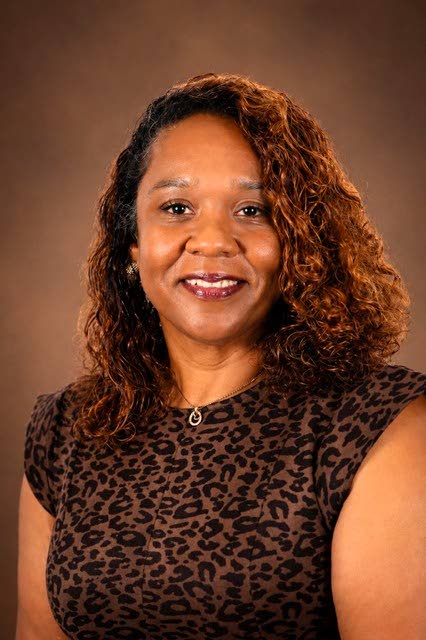 James. Photo - File
Inclusion has become a safe word. It rolls off many tongues like butter, but melts in the sun. Disability rights are now more frequently spoken about, diagnostic services are expanding, and the public increasingly recognises and demands that children with disabilities and exceptionalities are citizens who must be honoured because of their birthright to national provisions.
Progress sometimes requires interrogation because danger begins when presence is mistaken for participation and placement for access. A child can be present at school and still be excluded from meaningful learning and belonging. That is the uncomfortable space in which Jamaica’s inclusion conversation now sits. We have become increasingly fluent with the word “inclusion”, but less certain that we understand what it demands.
ONLY THE DOOR
For years, inclusion has been easiest to understand in physical terms: accessibility. Yet, physical inclusion answers only one question: Can the child get into the environment? It does not tell us whether the child can function within it. A ramp may bring a wheelchair through the gate but it cannot differentiate instruction, and being surrounded by typically developing peers does not automatically create belonging.
The second layer is instructional inclusion. Here, the questions become harder. Can the child actually access what is being taught? Can the child demonstrate knowledge in a way compatible with their learning profile?
This requires differentiated instruction, accessible learning materials, assistive technology, individual intervention planning, and appropriate assessment accommodations.
Our highly standardised education culture often struggles here. Children are organised by age, grade, curriculum, and examination expectations, while neurodevelopment does not unfold according to those categories.
A gifted child with dyslexia can occupy the same classroom, hear the same lesson, and sit the same examination while the method used to teach or measure competence creates the barrier. Giving everyone the same thing may look fair, but sameness is not inclusion.
DOES NOT MEAN MAINSTREAM
There is also a dangerous misunderstanding of the least restrictive environment.
Jamaica’s disability framework protects educational access and recognises that support must respond to individual need. The principle should never be reduced to the idea that mainstream placement is automatically inclusive while specialised placement is automatically restrictive.
A child with autism placed in a classroom without communication support, sensory regulation, appropriately trained assistance, or differentiated teaching may be physically among peers while functionally trapped by the environment.
For another child, a specialised setting with structured instruction, therapeutic input, and planned opportunities for peer interaction may provide substantially greater access, independence, and participation.
The question should not be, “How quickly can we put this child into the mainstream?” It should be, “What environment, supports and opportunities allow this individual child to participate, develop, and progress with dignity?”
NOT YET MASTERED
Neurodevelopmental inclusion asks something deeper than whether a child has a school place or a modified worksheet. It asks whether the environment understands the brain of the child who is registered. Autism is complex, with multiple factors that expose the weakness of rudimentary inclusion: You cannot accommodate this complexity simply by accommodating physical presence or giving extra time.
Meltdowns, elopement, impulsivity, restricted behaviours, communication difficulties, and severe dysregulation increasingly arrive in classrooms where educators are expected to respond with tools designed largely for typical classroom management.
A behaviour chart cannot resolve every neurological difficulty. Punishment cannot teach communication. Suspension cannot regulate a nervous system. And a special educational needs assistant (SENA), or shadow, cannot become an entire inclusion policy wrapped around one child.
Teachers must also be treated fairly in this conversation. We cannot increase the neurological, behavioural, and mental-health complexity of classrooms while pretending that teacher preparation automatically makes an educator a behaviour specialist. We keep speaking about preparing teachers for the modern classroom, but do we truly understand what the modern classroom has become?
There is a growing identification of neurodevelopmental conditions, alongside classrooms reporting increasingly complex behavioural, communication, and regulation needs. At the same time, we are witnessing a cultural shift in the career and learning pathways that interest children and young people. Preparing teachers for the modern classroom must therefore mean understanding both the changing learner and the changing world for which that learner is being prepared.
Schools are merging, and schools are closing. We talk about demographic shifts contributing to dwindling registration but, even as some primary schools struggle to fill classrooms, are we acknowledging the growing unmet demand for special education and clinical support? Some children remain at home, some are undiagnosed, some are misplaced in environments unable to meet their needs, and others are displaced between schools and services in search of appropriate support. We may debate the numbers and struggle to measure prevalence, but one thing is certain: These children exist, and empty classrooms in one part of the education system should force us to question unmet need in another.
‘Nothing is being done’ would be an unfair assessment. However, a delusional aura emerges when fragmented efforts are mistaken for a functional inclusion system. We must integrate multidisciplinary practice, including child psychiatry where clinically appropriate, because regulation and mental health cannot be separated from education, particularly when we close our eyes and picture these children as adults tomorrow.
The formative years must build the regulation, independence, skills, and pathways that allow neurodivergent children to become participating adults rather than adults for whom society suddenly has no plan. There needs to be an inclusion policy with defined pathways, multidisciplinary support, resources, measurable accountability and continuity across the lifespan, and the architecture to make inclusion real.
Ruthlyn James is the founding director of Adonijah Group of Schools Therapy and Assessment Centre. Send feedback to columns@gleanerjm.com