Tony Deyal | Chickens, chicks, cars and eggs
Loading article...
-
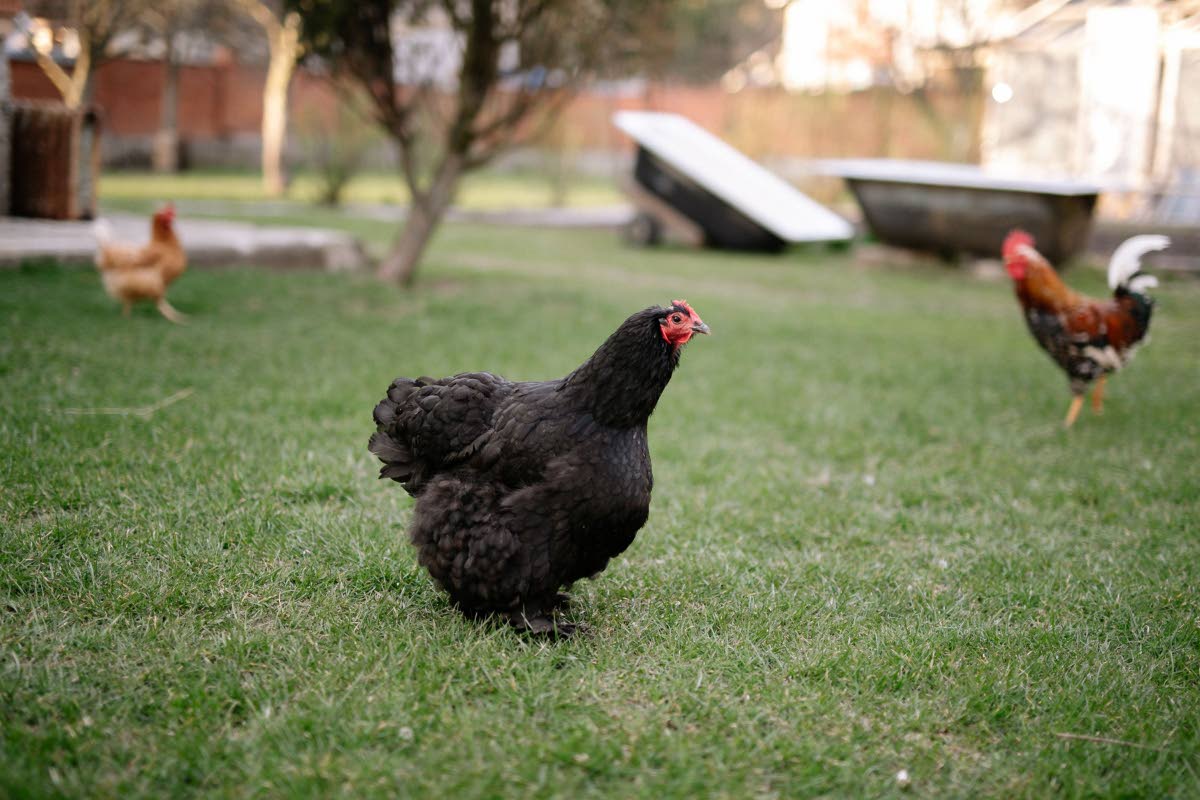 Photo - Pexels
-
Photo - Pexels
-
 Tony Deyal. Photo - File
In my days moving around for different companies, I found out that Argentina is the eighth-largest country in the world and the second-largest in South America. I found out that there was a “bimbo” for every taste and purpose, with or without cherries, brown and husky, white and milky, sweet and tasty, and hard and crusty. “Bimbo” is the name of the most popular bread and pastry manufacturer in Argentina and the brand is “ubiquitous”. In other words, it describes things you see so often that it feels like you cannot escape them.
So we found out that the Spanish language word for “bread” is “pan”. It is something the Trinidadian in me relishes. Pan is our national religion and musical invention. So it shows how sensible the Spanish-speaking people are to name my favourite food “pan”.
Moreover, “pan” is like a four-letter word throughout the world. But are we “bimbos”, or are we proud people born and “bread”? Well, you have a lot to choose from. First, there is “chicken” or the “egg”, which is “ċicen” from Old English and provides the terms for chickens. It starts with “Biddy”, a chicken, or a newly hatched chicken. Then there is “Capon”, a castrated or neutered chicken, and “Chick”, which is really a young chicken. The three that most people know are “Chook”, a young chicken, “Cock”, a fertile adult male chicken, and “Cockerel”, a young male chicken. We all know “Hen”, an adult female chicken, “Pullet”, a young female chicken less than 22 weeks of age, “Rooster”, a fertile adult male chicken, and Yardbird, a chicken from the United States.
Interestingly, “chicken” can mean a “chick”, as William Shakespeare’s play Macbeth laments the death of “all my pretty chickens and their dam”. Macduff, who eventually kills Macbeth, utters the line after learning of the murder of his family.
There are a lot of jokes with chickens and cars, like: “What is a chicken racing driver’s favourite part of the car?” The eggs-celerator.; “What did the car salesman say to the chicken?” Talk is “cheep”. Let’s make a deal!; “Why did the chicken stop in the middle of the road?” To block traffic!; and “Why do chickens make terrible car mechanics?” They spend all day pecking at the paint job.
Then we had the most important of all, ‘Farm Life & Relationships’, with “Why did the rooster break up with the hen?” She kept playing around all day.; “Why is the old rooster so bitter and worn out?” Because he is completely hen-pecked.; “Why did the hen get thrown out of the bar?” She refused to stop using fowl language.; and, “What do you call a rooster who brags about his morning routine?” Way too cocky!
The question that many people still ask is not so much about whether the head is excessive for chickens but how it got there. In the United States (US), I kept hearing what is called a “classic spelling rhyme”, like, “A knife and a fork and a bottle and cork, that’s how you spell New York.”
Fortunately for me, and even more for our small children, we moved out quickly so that we were not scared or, worse, destroyed by four dangerous things: a knife, a fork, a bottle, and a cork.
Then there was another one, called “Mississippi”, with, “M-I-crooked letter-crooked letter-I-humpback letter-humpback letter-I” (often chanted as a rhythm or jump-rope rhyme). I supposed that with “Mississippi”, instead of dangerous things in New York, we got crooked and more crooked, or worse, humpback letters and jump-rope rhymes.
Then in “Baltimore”, a major independent city in Maryland, with “B-A-double T-I-T-O-M-O-R-E” or more. In other words, these were similarly rhythmic local chants.
Fortunately, we never went there. The one that most of us knew and loved since we were small, in far places of the world, including Trinidad and the Caribbean, was, “Chicken in the car and the car can’t go, that’s how you spell Chi-ca-go.”
In the context of cars and driving, “chicken” usually refers to the classic dangerous driving duel called ‘playing chicken’. What participants do is drive two cars straight at each other to see who swerves first. Obviously, for the one who does not swerve quickly, that might be the end for him or her.
Then there was “The Game of Chicken”, in which two drivers speed towards each other on a collision course. The first driver to turn away out of fear is labelled the “chicken” (a coward) and loses. If neither driver turns, they crash.
Then there is “Screaming Chicken”, which is the famous slang name for the large, iconic Firebird hood decal of the late 1970s Pontiac Firebird Trans Am. It was a high-performance specialty version produced from 1969 to 2002. In automotive terms, it represented the pinnacle of GM’s era of factory-upgraded style, straight-line power, and track-inspired handling.
Then there was the Mercedes ‘Chicken’. A famous Mercedes-Benz commercial used the stable head-pivoting movement of a chicken to visually explain how advanced body-control suspensions keep a car level over bumps.
Finally, there were “Literal Pests”, when people literally found raw meat or chicken bones stashed inside a car engine bay, which meant that rodents or small animals had been using the warm space to hide stolen food.
And for some more, as we try to become the best as chickens, chicks, cars, and eggs: “Why did the chicken cross the road?” To get away from the driver who text-messaged in a sports car.; “A hen bought a fast convertible.” She wanted to feel the wind in her feathers before hitting a pothole.; “Driving a manual car is hard. It feels like teaching a rooster how to use a clutch with no toes.”; “Why do chickens make bad car mechanics?” They spend all day pecking at the spark plugs.
And to end as we started, with eggs and engines: “An egg tried to race a sports car at the green light. It scrambled away and cracked up under the pressure.”; “Why did the sports car break down near the henhouse?” It suffered a bad case of the yolk-ing gears.; “Never race an egg in a hot rod. One hard stop and your interior becomes an omelette.”; and “My car battery died near the farm. A rooster jumped on the hood and gave it a jump start with his loud wake-up call.”
Just to end with the hens: “What do you call a chicken with a potty mouth?” A mother clucker.; “Why did the chicken go to the séance?” To talk to the other side.; “Did you hear about the chicken who lost a fight with a lawnmower?” It was a disaster.; and “Why did the hen lay her egg on an axe? She wanted to hatchet.”
Tony Deyal, who has eschewed beef and pork, was last seen eating humble pie. He ordered “panceta”, thinking it was a kind of bread, and it turned out to be bacon. Send feedback to columns@gleanerjm.com