Editorial | The CCJ mustn’t flounder
Loading article...
-
 Justice Winston Anderson, president of the Caribbean Court of Justice.
-
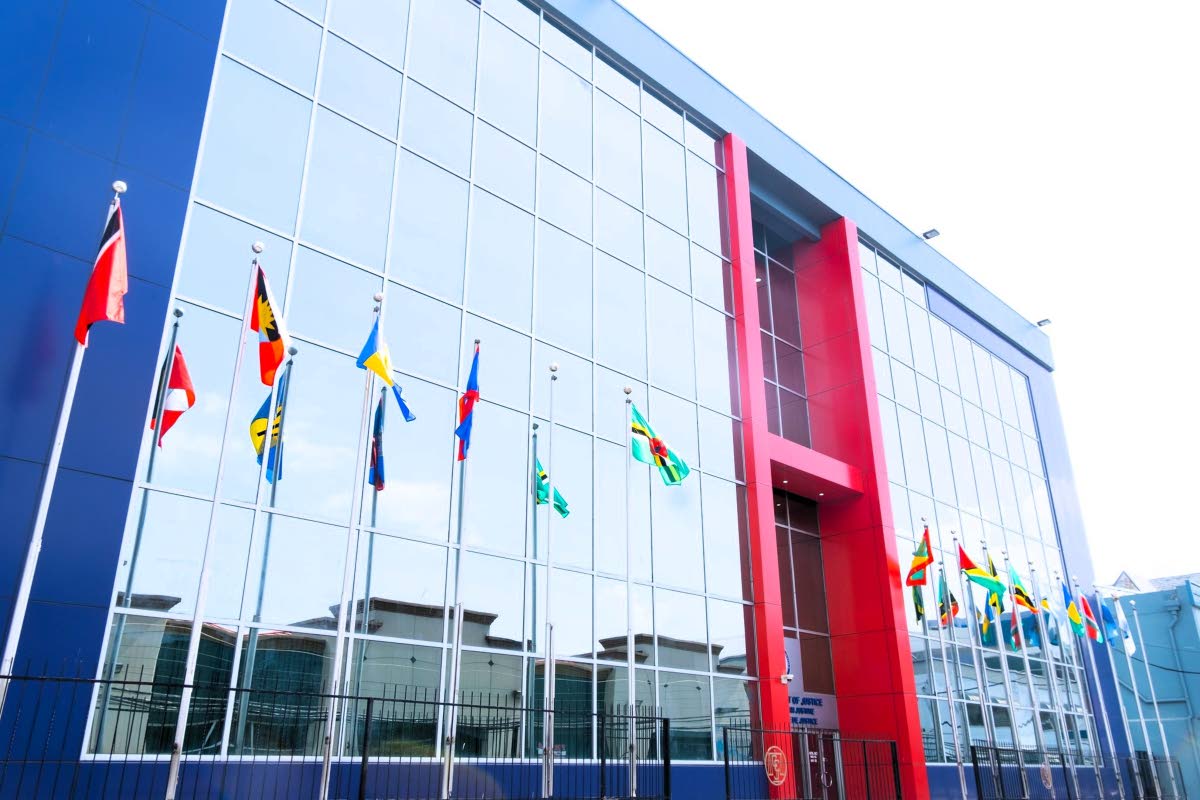 The Caribbean Court of Justice in Port of Spain
The Caribbean Court of Justice (CCJ) is facing an immediate reputational crisis and a potential erosion of confidence in the court.
The situation demands urgent action by the Regional Judicial and Legal Services Commission (RJLSC) - whose members include former Jamaican appeal justice, Hilary Phillips - and, if necessary, Caribbean Community (CARICOM) heads of government, to stem a potential long-term erosion of confidence in the CCJ.
That situation would only be to the benefit of those in the region who would have Caribbean countries cling to the Judicial Committee of the Privy Council as their apex court.
This state of affairs is not primarily because of the allegations of authoritarian tendencies and panel-fixing made against the court’s president, Winston Anderson, by several CCJ judges. The court finds itself in this predicament because some individual, or group, chose to leak emails that circulated between a highly restricted group of people - the CCJ justices.
At first look, the complaints against Justice Anderson, contained in the emails published by Trinidad and Tobago’s Express newspaper on Sunday, are personally and institutionally damaging, especially for a court that is still attempting to persuade the majority of CARICOM members to accede to the criminal and civil jurisdiction. All CARICOM members participate in the CCJ in its original jurisdiction, interpreting the treaty under which the community functions.
disagreement over a judges’ dress code
The new public fracas started as a disagreement over a judges’ dress code, which several justices felt that the president was seeking to push through the RJLSC, which he chairs, without sufficient consultation
This soon escalated into complaints of Justice Anderson’s management of the court, including accusations that he attempted to stifle judicial independence, and a claim by a Nigeria-born judge, Chile Eboe-Osuji (who had earlier accused Justice Anderson of “dictatorship” in the dress code matter), that he was removed from a panel for a case because the president was “itching to reverse or chisel down the decision that all seven judges of the CCJ rendered in the TCL vs Guyana in 2009, when you were not yet at the court”.
Apparently, the case from which Justice Eboe-Osuji was removed covered several of the principles dealt with in TCL, in which the CCJ, acting in its original jurisdiction, affirmed that corporate entities had legal standing to sue sovereign CARICOM members for breaches of the Revised Treaty of Chaguaramas. The ruling was considered a seminal development for CARICOM’s transformation to a genuine single market and economy.
Another judge, Trinidadian Patrick Jamadar, broadened his earlier disquiet over the dress code to concerns over how Justice Anderson ran the court. Among his examples was the president’s approach to the CCJ’s decision to empower a Guyana magistrate to go ahead with extradition proceedings against Guyana’s opposition leader, Azruddin Mohamed, and his father, Nazar Mohamed.
Justice Jamadar said he experienced Justice Anderson’s conduct at a judges’ conference on the Mohameds’ matter “as an attempt to influence the opinions of colleagues that differed from yours in an authoritative manner”.
full, frank discussion needed
Justice Anderson might have authoritarian tendencies and has created a “toxic” environment at the CCJ. But three facts are to be noted:
Justice Anderson’s version of events is not known. A public statement by him would probably do more damage.
It’s hard to fathom that Justice Anderson, by mere aggression, without intellectual heft, could intimidate highly accomplished judges to adopt his interpretation of the law.
It is not unknown for apex courts to overturn precedent, as famously happened in the United States in Roe v Wade.
Neither is it unprecedented for there to be sharp differences in judicial philosophy between judges. Such is the case between members of the liberal and conservative wings of the Supreme Court of the United States. In some instances, the work environment is “dysfunctional and hostile”, as Bob Woodward and Scott Armstrong revealed about the Warren Burger court (1969-1986) in their 1979 book, The Brethren.
In 2018 in India, four senior judges on the Supreme Court of India openly revolted against Chief Justice Dipak Misra. At a press conference, they accused the chief justice of, among other things, selectively appointing judges to hear politically sensitive cases.
The Indian judiciary survived that episode, which is the closest parallel to the situation at the CCJ. But India is a vast country of over a billion people, many of whom are not as close to events as is the case in the small islands of the Caribbean.
Moreover, despite the respect it has gained for the quality of its jurisprudence, the CCJ is still a young court. It has many detractors hoping for missteps to undermine its credibility and any perception that this region is capable of sustaining a high-quality final court. The leakers would or ought to have been cognisant of this.
The RJLSC, with Justice Anderson recused from those meetings, must aggressively get ahead of this crisis. It has to determine what, if any, substance there is in the complaints against Justice Anderson, and whether this is a matter on which the heads of government should invoke their disciplinary authority over the president.
Perhaps the situation only needs a full and frank discussion between Justice Anderson and the other justices, except for the leaking of private and sensitive emails. If it were a judge who released the documents, that person would have breached the CCJ’s code of judicial conduct and could no longer be on the bench.
Someone else would likely be guilty of contempt of court and, perhaps, breaches of Trinidad and Tobago’s cybersecurity laws.
Electronic security must be a major issue for the CCJ.