Serge Letchimy | Martinique in CARICOM: From accession to action
Loading article...
-
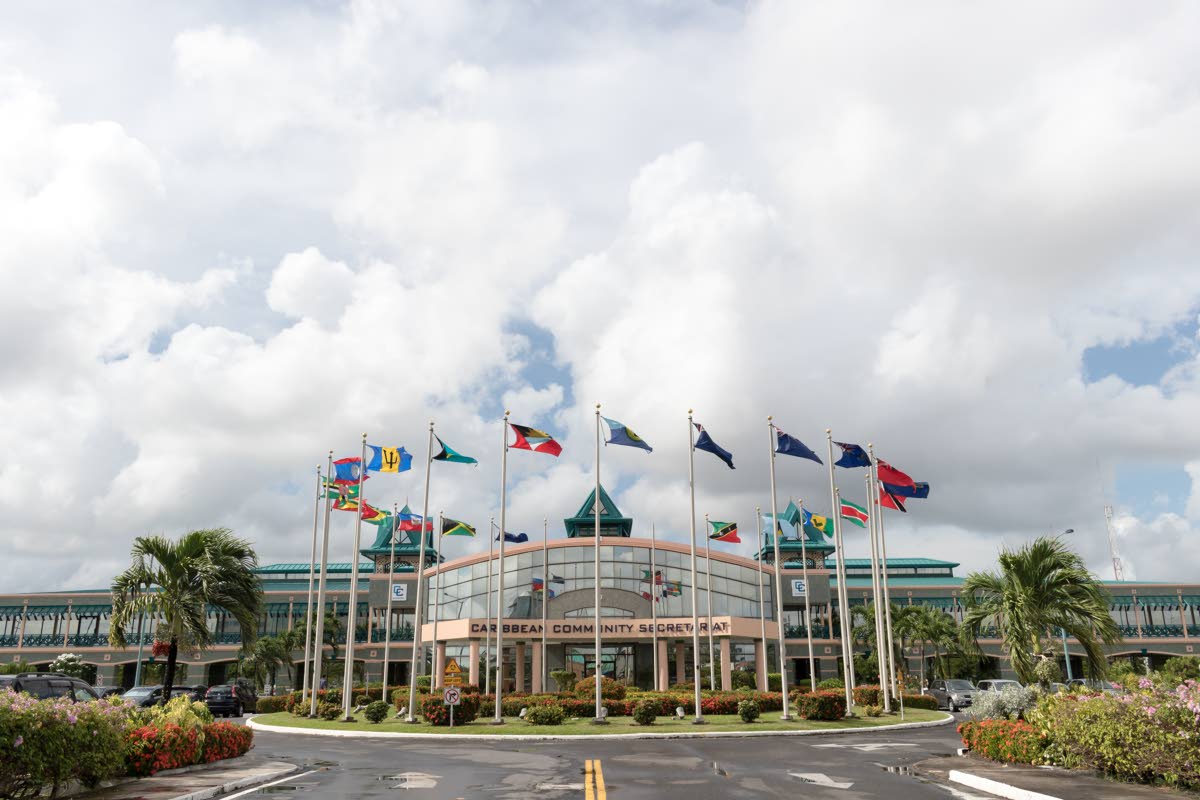 The CARICOM Secretariat building in Georgetown, Guyana.
-
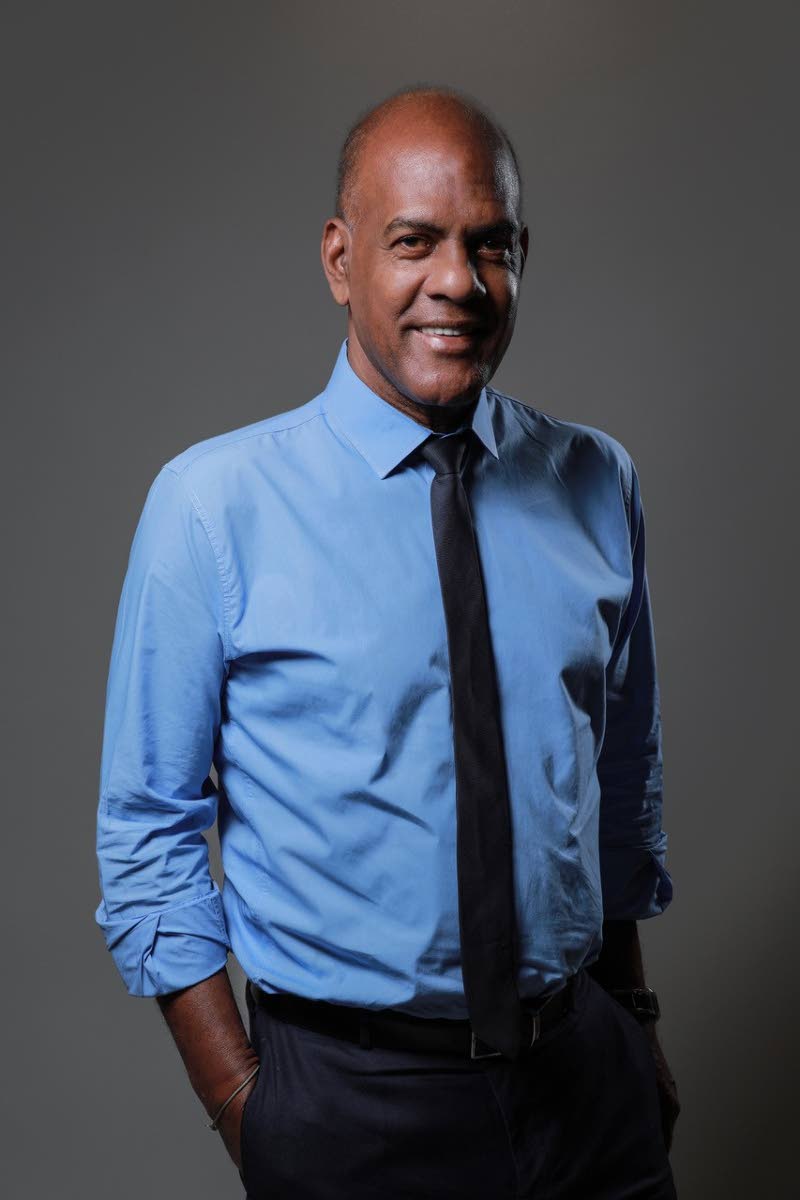 Serge Letchimy
On June 16, Martinique officially became an Associate Member of the Caribbean Community. A few weeks later, in Saint Lucia, our delegation took its seat for the first time at the Conference of Heads of Government of CARICOM.
For the people of Martinique, this was a moment of immense pride.
This accession is the culmination of a long political, institutional, and diplomatic journey. Above all, however, it formally recognises that Martinique is Caribbean by geography, history, culture, and destiny.
Our place within the French Republic and the European Union has at times contributed to an institutional distance from our immediate regional environment. Martinique’s accession to CARICOM gives us an additional capacity to act within the region to which we naturally belong. This dual affiliation can become a strength.
Martinique can serve as an active bridge between the Caribbean, Europe, the Americas, and Africa. It can help mobilise European expertise, funding, and partnerships for regional projects, while opening new opportunities for Caribbean businesses, institutions, universities, researchers, and cultural stakeholders.
As I stated in Saint Lucia, this accession should not be celebrated as an end in itself. It is only the beginning. A door has opened. We must now use it.
Our success will not be measured by the number of meetings we attend, but by the number of projects delivered, businesses connected, young people supported, transport links created, investments mobilised, and lives improved.
INTEGRATION MUST DELIVER RESULTS
The people of the Caribbean expect tangible answers.
They expect more accessible transport, greater food security, more economic opportunities, stronger health cooperation, greater resilience to natural disasters, and new prospects for young people.
Martinique, therefore, joins CARICOM with a clear determination: to build, propose, cooperate, and act.
We are not coming only to seek what the Community can offer Martinique. We are also coming to share our infrastructure, medical and scientific expertise, training capacity, cultural creativity, ties with Europe, and commitment to regional solidarity.
In a world shaped by climate change, geopolitical tensions, food insecurity, health crises, and rising transport costs, none of our territories can act effectively in isolation. We are stronger when we pool our capabilities and make a united Caribbean voice heard.
CONNECTIVITY AS THE FIRST PRIORITY
There can be no genuine regional integration without reliable, regular, and affordable maritime and air links.
Even today, it can be easier and less expensive to travel to Europe or North America than between two neighbouring Caribbean territories. This situation restricts mobility, limits trade, and disadvantages our students, artists, workers, and entrepreneurs.
Martinique intends to contribute actively to the establishment of a regional ferry service, carrying both passengers and goods.
We are ready to work with the CARICOM Secretariat, governments, port authorities, and economic operators to identify priority routes, the necessary equipment, and sustainable business models capable of ensuring the service’s viability.
The capacity, facilities, and services available in Martinique’s ports will support the work undertaken at regional level. We also wish to participate in the technical mechanisms devoted to maritime transport, particularly across the Lesser Antilles.
Improved air connectivity must accompany this ambition. Regional integration will become part of everyday life only when Caribbean people can move more easily between their territories.
TURNING PROXIMITY INTO ECONOMIC OPPORTUNITY
Regional integration must also create more opportunities for our producers, businesses, and investors. Martinique wishes to develop more direct trade corridors with its neighbours, facilitate the movement of goods, and encourage partnerships between Caribbean businesses.
Our ambition is to support productive sectors, particularly agriculture, fisheries, tourism, services, and the cultural and creative industries. We must bring our economies closer together, increase awareness of our respective markets, and make it easier for project leaders and partners to connect.
Our status as an Associate Member does not automatically give us access to all the mechanisms of the CARICOM Single Market and Economy. Our place within France and the European Union also entails legal, Customs, health, and trade constraints.
We must face these realities with clarity.
But these constraints cannot justify inaction. We want to identify solutions compatible with our status and, together with CARICOM, France, and the European Union, begin discussions required to deepen our economic integration progressively.
MOVING DIRECTLY TO ACTION
Our first participation in a CARICOM summit has already produced a tangible outcome. On July 7, I signed a renewable five-year cooperation agreement with the Prime Minister of Barbados, Mia Amor Mottley.
The agreement covers strategic areas including health, education, vocational training, tourism, fisheries, sport, disaster risk management, the cultural and creative industries, and the facilitation of trade.
Our shared objective is to transform our geographical, historical, and human proximity into projects that benefit our people through cooperation that is organised, measurable, and sustainable.
In health, opportunities exist, particularly in nuclear medicine and cancer detection. In education and training, we want to facilitate the mobility of students, apprentices, researchers, and professionals.
We intend to apply the same approach to our relations with other CARICOM members, particularly Jamaica, whose experience in the cultural and creative industries, sport, tourism, higher education, research, and entrepreneurship is an asset to the entire region.
MAKING YOUTH A REGIONAL FORCE
Caribbean integration must be built for the next generation.
A young Martinican should be able to see the Caribbean as a natural space for education, employment, entrepreneurship, culture, and mobility. Young people should be able to study, undertake an internship, develop a project, or create a business in another Caribbean territory more easily than they can today.
The same must be true for young Jamaicans, Barbadians, Saint Lucians, Trinidadians, Guyanese, and all young people across the Community.
This requires stronger language learning, partnerships between universities and training institutions, recognition of skills and qualifications, and closer links between our businesses.
Culture and sport must also play a central role.
The Caribbean is one of the most creative regions in the world, and Jamaica is a universally recognised example of that strength. Yet our artists, musicians, filmmakers, designers, and cultural entrepreneurs still face fragmented markets and linguistic or administrative barriers.
Greater regional circulation of creative works, artists, and expertise can transform this cultural power into jobs, investment, and international influence.
BUILDING A MORE RESILIENT AND UNITED CARIBBEAN
Our countries face the same vulnerabilities: hurricanes, earthquakes, rising sea levels, health crises, energy dependence, and disruptions to supply chains. Disaster risk management and climate adaptation must, therefore, be among our shared priorities.
We must strengthen the sharing of expertise, cooperation between our emergency services, preventive measures, and our collective capacity to respond quickly when a territory is struck by disaster.
This solidarity must also extend to Haiti, whose future concerns the entire Caribbean family. Martinique supports regional and international efforts to restore security and stability and to create the conditions for a return to constitutional order. Our integration into CARICOM strengthens our responsibility to contribute, within the scope of our powers, to collective responses to regional crises.
Martinique is proud to take its place within CARICOM.
We do so with humility and determination, convinced that Martinique’s dual Caribbean and European affiliation can serve the entire region. Our accession is not an end in itself. It places a new responsibility upon us: to give practical meaning to our shared Caribbean identity through tangible achievements.
A door has opened. It is now for us to walk through it together and build a Caribbean that is more connected, more resilient, more united, and more prosperous.
Serge Letchimy is the president of the executive council of Martinique. Send feedback to columns@gleanerjm.com