Don Dobson | Argentina’s dream factory: A wake-up call for safeguarding in sports
Loading article...
-
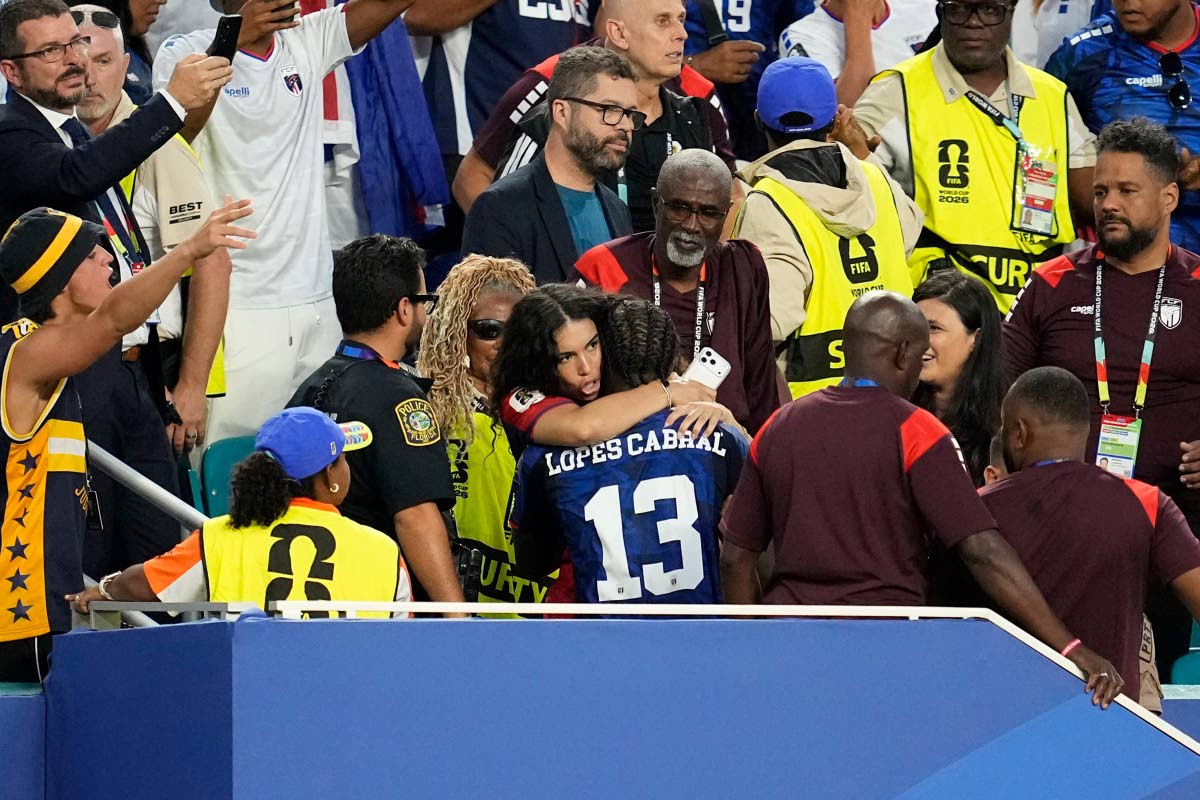 Cape Verde’s Sidny Lopes Cabral (13) celebrates their second goal in the stands during the World Cup round-of-32 match against Argentina in Miami Gardens, Florida, on Friday, July 3.
-
 Don Dobson is a Chevening Scholar and sports governance specialist.
The Cinderella run of Cabo Verde in this year’s FIFA World Cup, which included a draw against eventual Champions Spain and a spirited performance against beaten finalists Argentina, has Jamaicans wondering what could have been, and what now needs to happen, for the Reggae Boyz to return to the showpiece event.
Some have called for radical change at the Jamaica Football Federation, arguing that football has been poorly administered, resulting in the national senior men’s team failing to qualify for the FIFA World Cup since its debut in 1998.
Others have urged greater investment in grassroots football to expand youth participation and strengthen talent identification and development. Enough of the search for quick fixes and short‑term gains; the real work begins at the foundation. Incidentally, this position mirrors the education sector, where sustained investment in early-childhood education is widely regarded as essential to building the nation’s human capital.
Crucially, such investment must go beyond facilities and coaching to include strong governance and safeguarding. Protecting children as they train and compete is a fundamental responsibility, not an afterthought. Success should be measured not only by the number of elite athletes produced, but by whether young people develop in environments free from abuse, exploitation, harassment, and negative influences that could impair their physical, mental, or moral development. Embedding safeguarding into Jamaica’s sports system is essential to building both champions and a culture of integrity.
Argentina, A Cautionary Tale
ESPN’s multimedia investigation, The Dream Factory, exposed troubling realities within Argentina’s football development system, where the dream of producing ‘the next Messi’ created fertile ground for exploitation. Young players recruited into academies under promises of stardom instead faced sexual abuse, neglect, unsafe living conditions, and financial manipulation. The findings revealed systemic failures: inadequate oversight, weak safeguarding structures, and a culture that prized talent pipelines over child welfare.
The conditions that enabled exploitation in Argentina are not unique. Jamaica’s own yearning to produce its own Messi, or ‘the next Usain Bolt or Shelly‑Ann Fraser‑Pryce’ creates similar pressures in football, track and field, and other sports. Our federations and clubs face resource constraints, uneven governance capacity, and a heavy reliance on volunteers; all factors that can leave young athletes vulnerable. Safeguarding must therefore be central to any transformation plan, and protecting children and vulnerable participants must be a core benchmark of progress.
Most governing bodies, both locally and internationally, acknowledge the importance of safeguarding in sports. The real challenge lies in practice, ensuring consistent implementation through concrete activities. A governance review, by consultancy I Trust Sport, of 29 International Olympic Committee Recognised International Federations found that only 11 had implemented safeguarding measures against harassment and abuse, such as training programmes or the presence of safeguarding officers at events. By contrast, nearly half - 14 of the 29 - reported only limited activity in this area, falling short of a formal safeguarding policy. This gap between awareness and action underscores the urgent need for vigilance and accountability.
Local Context and Cultural Pressures
In Jamaica, the risks are compounded by socio‑economic realities. Many poor children and families view sport as a pathway out of poverty, which can lead them to overlook signs of harm, believing it will all pay off if stardom eventually comes. At the same time, coaches and administrators are often held in high esteem, while children may fear retaliation or losing opportunities if they speak out. These realities reinforce why safeguarding must be proactive, not reactive. By cementing strong child-protection measures now, Jamaica can strengthen its sporting system and help ensure it never faces the kinds of failures exposed elsewhere.
Stakeholder Responsibilities
Safeguarding requires every stakeholder to be ‘match‑fit’. Boards and senior leadership must treat safeguarding as a core governance responsibility, not a peripheral concern. Coaches, volunteers, and administrators must receive regular training, and contingencies must be in place when trained personnel leave the system. Parents and guardians must be informed and vigilant, while children themselves must know where to turn if they feel violated. Monitoring mechanisms, such as annual surveys, independent audits, and transparent reporting, are essential to ensure that safeguarding policies are not symbolic gestures but living practices.
Best Practice
England Hockey demonstrates how safeguarding can be embedded into the fabric of sport. Its approach goes beyond policy, combining clear codes of conduct, regular training, engagement with parents and children, and ongoing monitoring to ensure accountability. The message is simple: safeguarding is not a one‑time commitment; it is a culture built through education, vigilance, and accountability.
For Jamaica, the lesson is clear. If we aspire to sustain our reputation for world‑class athletes, we must also build a world‑class safeguarding culture. Safeguarding requires vigilance, commitment, and systems that endure beyond individual personalities or short‑term campaigns. Children must be able to train, compete, and thrive in environments where they are safe, heard, and protected. Ultimately, safeguarding is not an add‑on to good governance - it is a defining test of governance.
Don Dobson is a Chevening Scholar and sports governance specialist. Send feedback to columns@gleanerjm.com.