Kristen Gyles | No shortage of land
Loading article...
-
 Kristen Gyles
-
Kristen Gyles
-
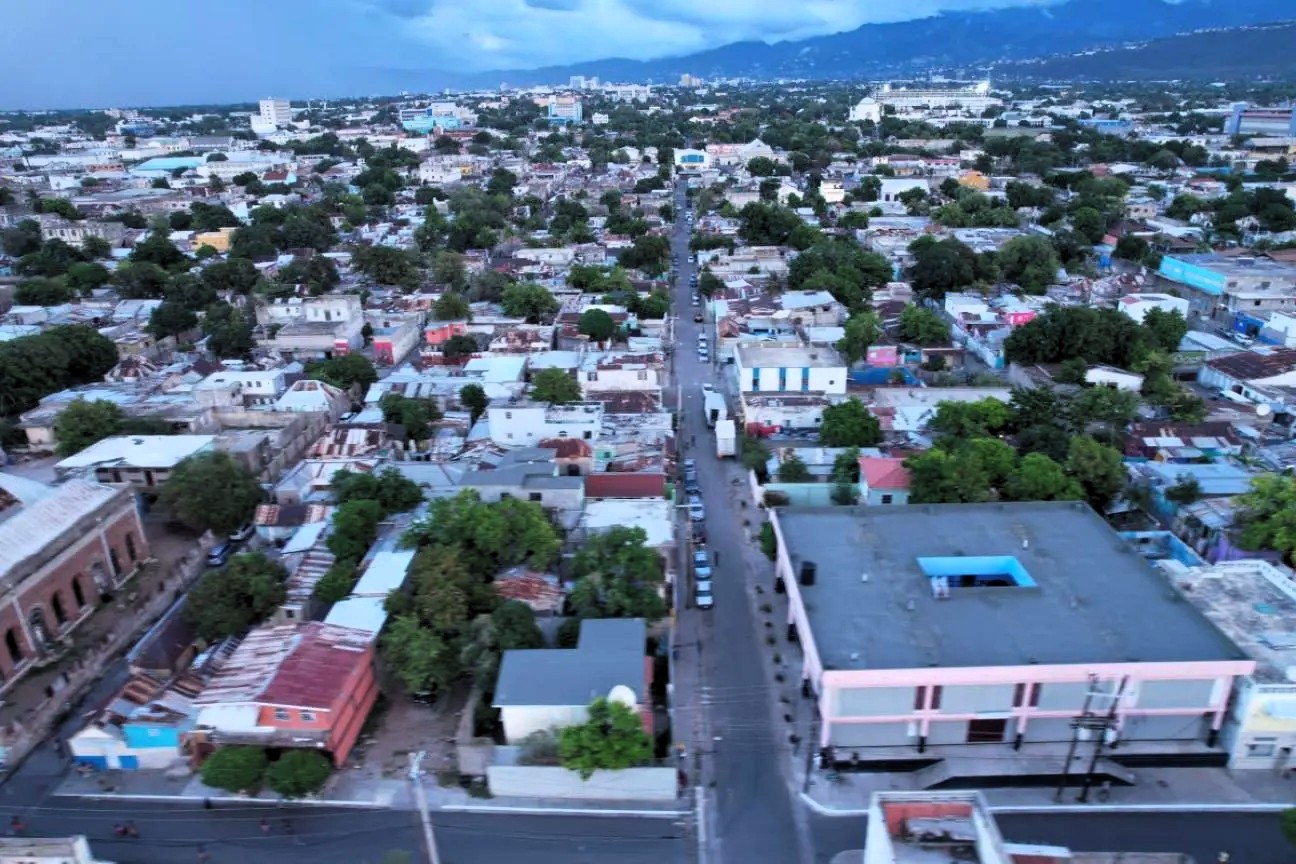 This file photo shows an aerial view of downtown Kingston.
If you've ever had the privilege of travelling over the island by plane, you have probably looked down from the airplane window and marvelled at the vast amounts of unused land across Jamaica.
Most of the land is absolutely unused - no structure, no cultivation and no indication of human habitation. Only a fraction of our island is being used to any degree. This is partly because a significant proportion of the available land is government-owned and is not being used because the government is either not ready to use it or has no plan for it. Then there is another large proportion of land for which ownership is legally uncertain.
Only a fraction of the Jamaican soil is really up for sale. Government land is not routinely sold to the public and again, another large expanse has no clear owner. So Jamaican citizens must buy and sell among themselves, the same parcels of private land. Of course, if the supply of saleable land is not increasing, while the population of people both interested and empowered enough to purchase land is increasing, the price of land will increase. This is what has been happening. Less than 14,000 square feet of land in Hellshire now goes for $17 million and a quarter acre in Brown’s Town for $12 million, that is, according to last week’s Sunday classifieds.
Further, even the most unfruitful and inaccessible pieces of land have become unaffordable for working-class Jamaicans. We don’t need to waste time discussing the price of an actual home. It suffices to say that the average Jamaican struggles to find the means to purchase land suitable for them to either build on or to cultivate for income generation. This should give some insight into why Jamaica has a ‘squatting’ problem.
Squatting is the practice some Jamaicans have adopted of occupying a vacant space, whether land or building, without the permission of the rightful owner. They simply need somewhere to live, discover the existence of an empty place they can live in or on, and make a bet with themselves that no one will ever kick them out. Whatever value judgment one wants to attach to this practice, it is often done out of a sense of desperation.
However, squatting has far-reaching social implications. Imagine migrating to another country for work, while being the title owner of land in Jamaica. You pay your property taxes from year to year for several years, expecting that you will one day return to Jamaica with enough money to build your dream home on the land you already purchased. Instead, you return to see that a concrete house-like structure has already been erected on the land. The problem is, someone is living in it, and it is not you. To make matters worse, the resident is bare-faced enough to tell you that the land is now theirs. So, instead of returning to build your dream home, you walk right into the nightmare of a court case. Is that really fair to you?
Squatters do have rights, under our laws. The Limitation of Actions Act essentially states that a squatter can claim legal right to private property or land through adverse possession if they have been occupying the property or land for 12 years or more, uninterruptedly. However, the squatter can only make such a claim to government land after 60 years.
Within a context where government land abounds, a Jamaican who lives overseas or who is otherwise unavailable to tend to their property for a moderate period of time should never be dispossessed of their land simply because of the way they choose to use it (or not to use it), provided it is not consistently overgrown or becoming a nuisance to others. Why? Because there is enough land for all of us. There is no shortage of land. So, to take land from one living person and pass it on to another in the name of ‘equity’ is not very equitable, especially when land is now so costly. This is, of course, not in reference to “no man’s land” that has no legal certainty.
On the other hand, what does it really mean for the government to own land? The government is not an individual, or family, in need of a place to sleep at night, so government land typically ends up sitting idle for decades upon decades.
It is understandable that it might be too costly for the government to build houses and rain them down on the poor like Santa Claus at Christmastime, but especially at this time when there are many people living in Westmoreland and Saint Elizabeth who are still displaced by Hurricane Melissa, can't a little of the vast amounts of government land be leveraged to provide lodging for those who need it? At this point, does the country have anything to lose by extending tenancy of government land, specifically to those who have been displaced, for some medium-to-long-term period? That is, at minimal cost?
Now, let’s be fair. Even if land becomes available in the country, some people will still go out of their way to squat on other people’s property in town, if that becomes an option for them. But this does not negate the benefit that will accrue to hard-working people who only need a start from the government. The government can never fully eliminate squatting, but it certainly can come close. A good starting-point is the recognition that the immeasurable amount of government land can be better utilised to the benefit of the citizenry.
Kristen Gyles is a free-thinking public affairs opinionator. Send feedback to kristengyles@gmail.com and columns@gleanerjm.com