Peter Espeut | Violent society, violent adults, violent children
Loading article...
-
-

Peter Espeut
There has been much concern expressed in the press and on the airwaves about violence between students in our public schools. In recent months, two students have been killed by their peers in separate high school incidents.
Lesser incidents rarely come to public attention, but they happen often enough. A quick Internet search turned up data that there were a total of 55 Critical Incident Reports, mostly related to violence in schools, made (as required) to the Ministry of Education and Youth, between January 2022 and January 2023. These 55 critical incidents occurred at 50 different schools (15 primary and 35 high schools). Five of the schools had two critical incidents each.
Given that there are 190 school days in the school year, 55 incidents in a year equate to a critical incident happening somewhere in the education sector on average every 3.4 school days, or just about three incidents every two weeks.
This indicates a serious situation four years ago, requiring serious action, yet I am not sure if anything was done about it. But it has gotten much worse since then.
Between January 1 and March 26 this year (2026), 49 violent incidents were reported in Jamaican public schools. With fewer than 60 school days over the period, that computes to one violent incident every 1.22 days or more than three per week!
The rate of reported incidents of school violence has doubled over the last four years! If it was serious in 2022, it is critical now. This data come from the Ministry of Education, so they are fully aware of the extent of the problem. I have not heard any proposals from them about urgent short-term, medium-term, or long-term strategies to be implemented.
Expect it to go from worse, to worst, to wusserer!
Data indicate about 60-65 per cent of students have experienced bullying, with high instances of fighting and weapon use (including knives and scissors) reported in schools. Some students carry weapons as self-defence against bullies, so zero tolerance against the possession of weapons might increase student insecurity. Better to have zero tolerance against bullying.
But let’s face it: Jamaica is a violent society. Jamaican adults are violent. Is it therefore surprising that Jamaican children are violent?
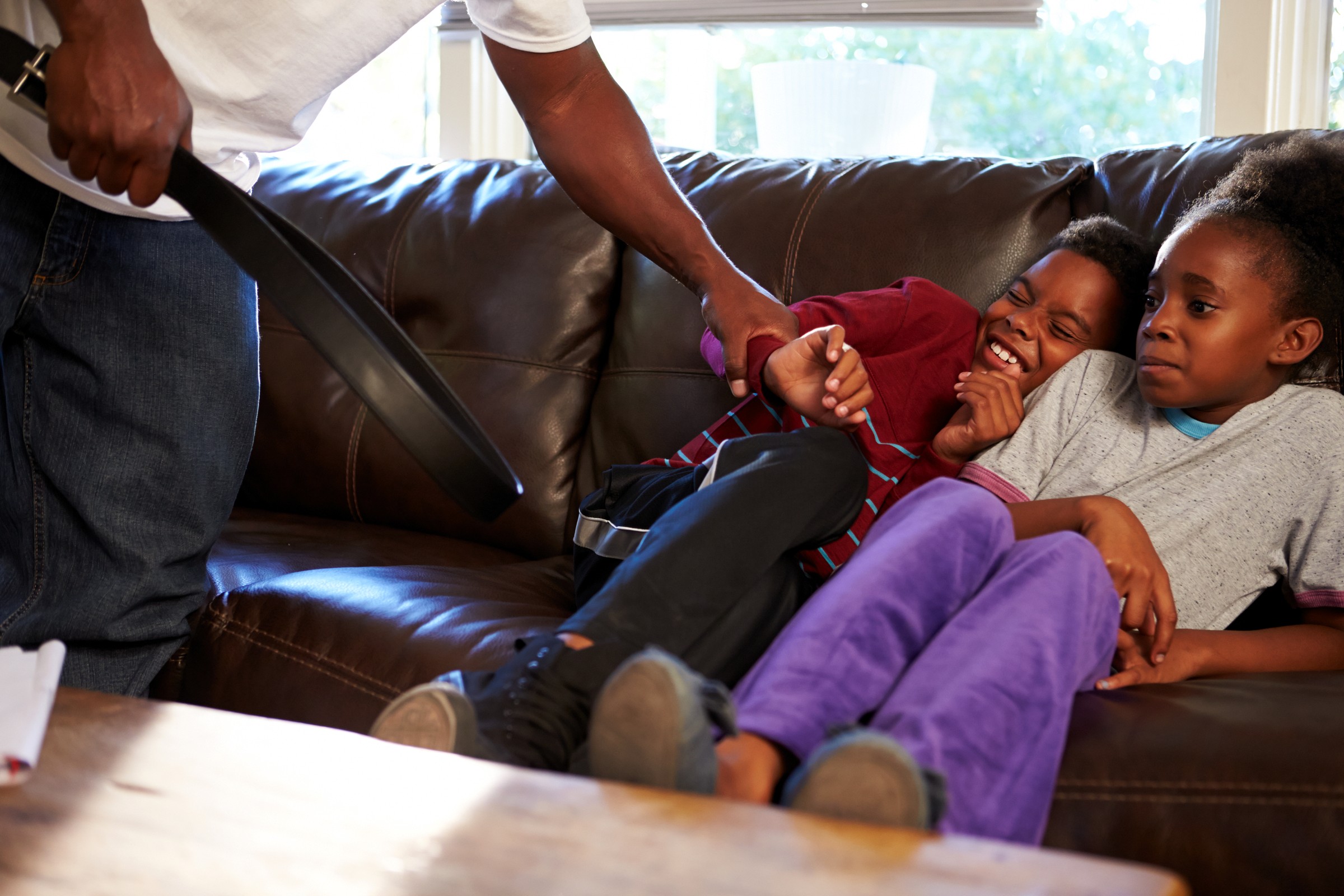
No Jamaican child is born violent. There is no gene for bully or gang member or gunman. Those beautiful baby boys lying in their bassinets are big bundles of positive potentiality. Children live what they learn and they learn to be violent from their elders. Every sociology 101 student learns that this process is called “socialisation”, and it is very effective. Children who are beaten by their parents will probably beat their children. Girls who observe their mothers abuse their fathers, will probably abuse their boyfriends. Boys who lack male role models at home or in school, might seek role models in gangs, crews and posses. Nowadays, social media might be an even more significant agent of socialisation – really parenting our young people – than the home, school, and church combined. Are we happy with that?
On November 14, 2024, the United Nations Children’s Fund (UNICEF) revealed the findings of The Jamaica Violence Against Children and Youth Survey 2023 (VACS).
“The findings are concerning,” said Olga Isaza, representative of UNICEF in Jamaica. “The report is an urgent call for Jamaica to invest more to prevent violence against children and youths. This groundbreaking report sheds light on a harsh reality. Violence in families and communities is widespread, and children and youths are bearing the brunt of it. The wealth of data provided by this survey can guide prevention and response interventions that are grounded in the national context and are actionable.”
The VACS report shows that violence against children and youth is common, with more than 75 per cent of children and youths (i.e., more than three out of every four) have experienced violence. It also found that children and youths who experienced violence have higher risks of health and social problems, such as chronic diseases, mental health issues, and substance abuse, and are likely to become violence-producers later in life.
So, it is important to be concerned about children who are perpetrators of violence in schools, but we need to be aware that the source of the problem is not the children themselves, but the violence adults perpetrate on young people and adolescents, which disposes them to become violence-producers.
Many of our young people are wounded, and lash out against others in their pain! Responding to violence by young people with violent punishment, i.e., punishing a wounded child, is the height of ignorance, and will only make the problem much worse.
What is needed is therapy, healing! And to remove the source of the negative socialisation.
Children who see conflict between their parents come to blows, learn to resolve conflicts at school or in their neighbourhood by violence.
Jamaica has one of the highest murder rates in the world. Seeing the police reduce the murder rate by killing suspects, teaches lessons to people young and old. Jamaica’s high rate of police killings might, in fact, have seriously negative consequences down the road.
As Mohandas (Mahatma) Gandhi is alleged to have said, “An eye for an eye makes the whole world blind”.
A large number of people are going blind – and into May Pen Cemetery – due to reprisals and retribution.
Poor people who become seriously wealthy after a few years in politics, and reports of corruption by politically connected people, teach lessons to young and old. When over the years, reports and allegations of political corruption multiply, and do not lead to arrests and convictions – or even disgrace – young people are incentivised to try corruption, for it seems to be a prosperous vocation.
This means that the problem of youth violence and youth crime cannot be solved in isolation; violence and crime among Jamaican adults also have to be dealt with.
Peter Espeut is a sociologist and development scientist. Send feedback to columns@gleanerjm.com