Lloyd Barnett | Impeachment – substantive defects in the legislative proposals
Loading article...
-
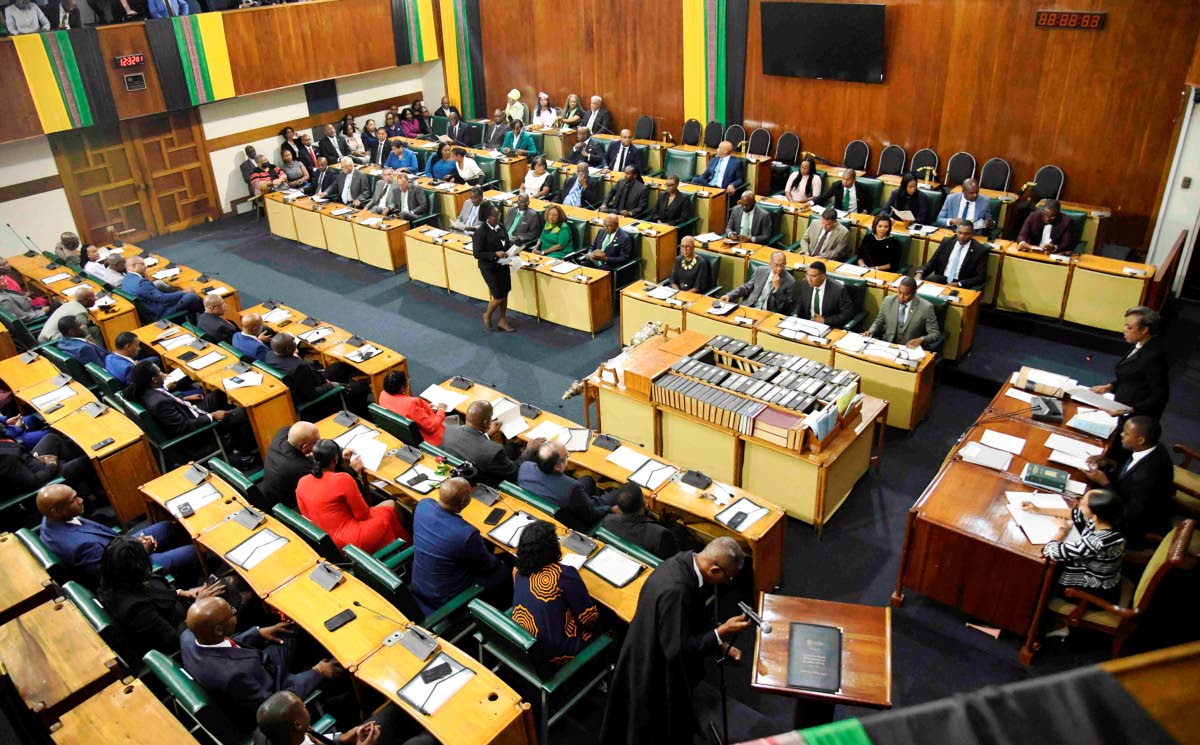 Members of parliament at Gordon House. Photo - File
-
Members of parliament at Gordon House. Photo - File
-
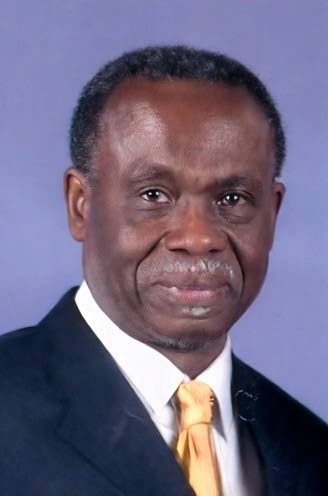 Lloyd Barnett. Photo - Contributed
There have been several proposals for the adoption of impeachment in Jamaica. The most notable is what may conveniently be called the Golding Model. A bill for the inclusion of impeachment in the Jamaican Constitution was first tabled in Parliament by former Prime Minister Bruce Golding. A similar bill was subsequently tabled by Leader of the Opposition Mark Golding. It is, therefore, only necessary to examine this second bill.
The offices specifically targeted by the second Golding Bill are Senators and members of House of Representatives. The penalty proposed is removal from the House of which the impeached person is a member. It provides for the disqualification of that Member for specified periods or indefinitely but gives no right to challenge this decision if it is faulty or the punishment is excessive.
The bill raises questions relating to due process and the administration of justice. It lists five categories of misconduct as falling within the impeachment jurisdiction. The first is “corruption or misappropriation of public funds or property”. These are essentially criminal offences. The finding of guilt or the imposition of penalties for the commission of these offences if not conducted by the courts is an infringement of the principle of the separation of the judicial function. Such matters are subject to investigation by the police or established authorities such as the auditor general and Integrity Commission. The prosecution of these offences is under the constitutional control of the director of public prosecutions. This provision is of doubtful constitutionality because it trespasses on the constitutional jurisdiction of the judiciary and the constitutional responsibilities of the director of public prosecutions. Since the impeachment process cannot be treated as replacing court proceedings, the impeached member will remain subject to a criminal trial for the same breach if it amounts to a criminal offence. There is no solution provided for the problem of whether the criminal process or the impeachment process should have priority or be capable of being conducted at the same time. Faced with these problems, former Prime Minister Bruce Golding had suggested removing criminal offences from the definition of impeachable cases in the proposed legislation. This would mean that the process could no longer be accurately described as “impeachment”.
The second category of impeachment offences proposed in the bill is described as “refusal to exercise, or persistent neglect in the exercise of the duties or responsibilities of the office held by the Senator or the Member of Parliament impeached”. This category is vague and imprecise. The duties of parliamentarians are not precisely “defined” as pointed out in previous articles in this series. As this provision is formulated, a member could be impeached for irregular attendance at meetings of committees of the House, or at his or her constituency office, or for failure to ask questions or table any private members’ motion, or for continuously abstaining from voting on important issues.
‘ABUSE OF OFFICIAL AUTHORITY’
The third category proposed is described as “abuse of official authority”. Its vagueness is palpable. It is not clear what is the nature of the “official authority” referred to nor what qualifies as “abuse”. The basic duty of a member of the House of Representatives is to speak on behalf of his or her constituents in Parliament and to vote for or against bills and resolutions. It is not clear whether the making of defamatory statements in Parliament would be impeachable although one of the most established principles of the parliamentary system is the freedom of speech of members, which is only controlled by the application of the Standing Orders.
The fourth category of “deliberately misleading or intentionally abusing the privileges of Parliament” appears to be a duplication of the second category. The only relevant privilege a member of either House has is freedom of speech, which, in democratic constitutions, has always been given substantial protection against any civil or criminal proceedings. The famous English constitutional provision of the 1688 Bill of Rights declared that “freedom of speech and debates or proceedings in Parliament ought not to be impeached or questioned in any Court or place out of Parliament”. Most constitutions of democratic countries, including ours, adopt this principle and prohibit civil or criminal proceedings against any member of either House for statements made in Parliament. It is recognised that in the cut and thrust of parliamentary debate, a member may make a statement, which, on proper research, is shown to be inaccurate. His or her political opponents could thus use this provision to institute impeachment proceedings in a scheme designed to secure the member’s removal from the House.
The fifth impeachable offence proposed in the bill is “egregious conduct or other misbehaviour unbefitting of the holder of the office of Senator or member of Parliament which is so serious as to render the holder of the office unfit to continue to hold that office or bring the office held by the person into disrepute”. The vagueness of this description is disturbing. Different opinions may be genuinely arrived at in assessing the seriousness of the conduct in question. For instance, conduct that amounts to dangerous driving, using indecent language, unlawful littering of a public place, or failure to file the prescribed statutory declaration of assets by the prescribed time may be included in this group. Politicians would find many situations in which it is feasible and politically strategic to lay this charge so as to subject their political rivals to the burdens and embarrassment of impeachment.
Accordingly, the substantive provisions of the impeachment bill are manifestly defective. In the next article in this series, I will deal with the procedural deficiencies of the bill.
Dr Lloyd Barnett is an attorney-at-law and author. Send feedback to columns@gleanerjm.com.