Yaneek Page | Pay late, rebuild slowly: Jamaica’s prompt payment dilemma
Loading article...
-
 Yaneek Page. Photo - AG Guest Guest
-
Yaneek Page. Photo - AG Guest Guest
-
 Dr Brian Langrin, Bank of Jamaica Governor
-
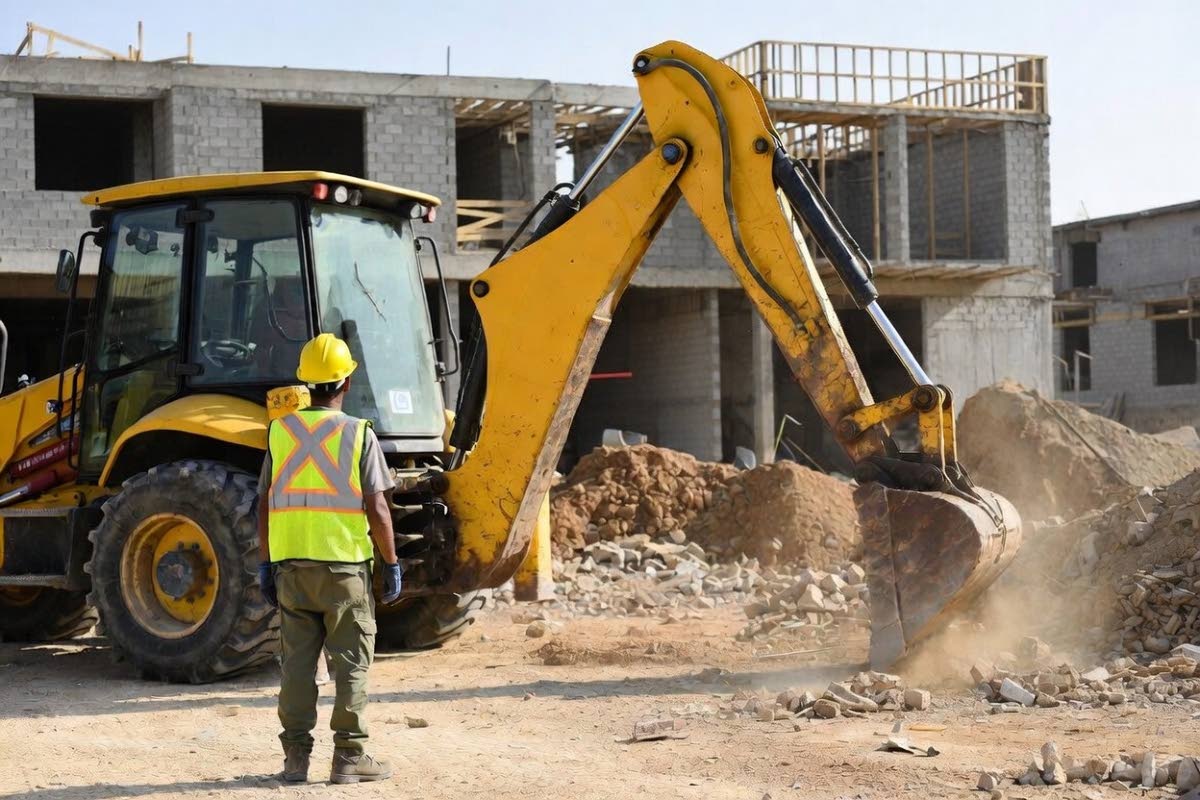 A construction site generated by Grok. Photo - AG Guest Guest
One of the fastest ways to put contractors out of business, slow down work, and earn a reputation as a government nobody wants to do business with is to pay late. Word in the industry travels quickly, and a reputation for chronic late payment sticks like cement. The domino effect is destructive and quite easy to predict — contractors lose interest in bidding, suppliers tighten credit, and skilled workers either avoid or refuse the work. In a single act of institutional neglect, late payment will drain the lifeblood from the government contracting system, inflate project management costs, and virtually guarantee that critical work runs behind schedule and over budget. Eventually, the State pivots to a familiar defence: lamenting a “national shortage of skilled labour” while blaming unnamed bureaucratic obstacles for delays. It is a familiar tune for Jamaica that masterfully absolves government of responsibility.
A year after Hurricane Melissa, Jamaica must reflect deeply on how much of its reconstruction difficulty is of its own making. In October 2026, the Incorporated Masterbuilders Association of Jamaica (IMAJ) reported that some contractors were still awaiting payment for school repairs following Hurricane Beryl in 2024. Imagine asking businesses to answer another national emergency while bills from the last one remain unpaid.
In my last column, I urged NaRRA to mandate 30-day payments and attach automatic interest to late disbursements. This was no polite policy suggestion because payment discipline may be the red line between whether Jamaican businesses rebuild their country or are driven out of the market trying.
Winning the work does not finance the work
My hands-on work administering large United States federal contracts taught me a lesson Jamaica struggles to embrace. Government’s obligations extend beyond securing value for money. Federal rules expressly require contracting officers to ensure that contractors receive fair and equitable treatment. In practice, that meant taking payment obligations seriously and addressing disputes promptly. Fair treatment is part of the job, and good stewardship required government to keep its end of the bargain.
Let me explain why this is crucial. A business can win a substantial contract, employ talented managers and skilled workers, perform satisfactorily, and still run out of cash executing the project. Winning the work is a completely different animal from financing the job through its lifecycle.
I can’t stress this enough: construction consumes cash. Consider a hypothetical contractor in St Elizabeth who repairs a school roof. His crew expects fortnightly wages. The hardware store requires payment upfront or at month-end. Yet months later, his invoice is still awaiting somebody’s signature. He can borrow, stall suppliers, or send workers home. But every option carries a cost for his business and the community depending on it.
What effective prompt payment frameworks do
The United States has one of the most effective frameworks as a matter of rule. Federal construction progress payments are generally due within 14 days of a properly initiated payment request, once accepted. The ordinary invoice-payment framework generally provides 30 days, linked to proper invoicing and acceptance. Qualifying late payments attract automatic interest. The fact that the construction window is less than half the time for other services shows that their government recognises the urgency. Construction businesses need their money like yesterday.
That urgency also applies to disputes. Suppose during a school repair the contractor and the government have a disagreement over its value. While the variation is unresolved, workers and suppliers still expect payment. An unresolved claim can become a stalled project, and the contractor’s ability to complete the work weakens. Britain’s construction legislation generally requires adjudication decisions within 28 days of referral, subject to permitted extensions. Canada’s federal framework provides adjudication and supports payment of undisputed items while contested amounts are resolved. These arrangements give disagreements a route to resolution while protecting the flow of money through the project.
Years of warnings
Of note is that Jamaican contractors have been sounding the alarm for years. In October 2023, then IMAJ president Lenworth Kelly criticised lengthy procurement processes and the burden of financing public projects while awaiting payment. By September 2024, the association was seeking monitored payment timelines, better contract conditions and proportionate bonding requirements. In May 2025, IMAJ estimated that Southern Coastal Highway subcontractors were owed $2.9 billion. These warnings preceded Melissa.
Jamaica’s financing constraints compound the problem. Earlier this year, Finance Minister Fayval Williams acknowledged policy uncertainty around factoring government receivables. On a hopeful note, a recently introduced private bank facility may offer eligible businesses access to money tied up in unpaid government invoices. To be clear, financing of such receivables has its place. However, it shouldn’t be routine for businesses to pay for systematic deficiency. Why should contractors sacrifice part of an earned payment because government cannot settle on time?
As government looks overseas to overcome shortages, it must also establish what Jamaican firms could deliver with timely payment, settled claims, properly prepared projects, and accessible finance. Yes, targeted foreign expertise may be necessary. However, bypassing capable domestic firms while leaving their money trapped in government receivables would be a profound failure of reconstruction policy. To that end, here are five reforms that are impatient of action:
Legislate prompt payment — Establish 14 days for proper construction progress-payment requests and 30 days for other valid invoices, with clear verification rules and automatic interest on qualifying late payments.
Pay what is undisputed — Release sums promptly while contested amounts undergo review.
Adjudicate on a clock — Establish independent adjudication with a 28-day decision timetable and tightly defined extensions.
Assign responsibility for fair treatment — Designate an accountable officer in every procuring ministry and agency, including NaRRA. Publish payment performance and unresolved claims.
Measure local participation — Set contractual targets for Jamaican employment, subcontracting, and skills transfer wherever overseas firms are engaged. Report the results.
Finally, accountability runs both ways. Jamaican contractors must accept rigorous accountability, too. US and Canada federal construction contracts can require correction of defective work at the contractor’s expense and permit default termination. And where applicable, contractual liquidated damages impose a daily cost for delay.
It is important for the State to demand world-class performance but not while practising third-rate contractual and financial stewardship.
One love,
Yaneek Page is the programme lead for Market Entry USA and a certified trainer in entrepreneurship.