Twin Peaks model? NO! Regulatory reform? YES!
Loading article...
-
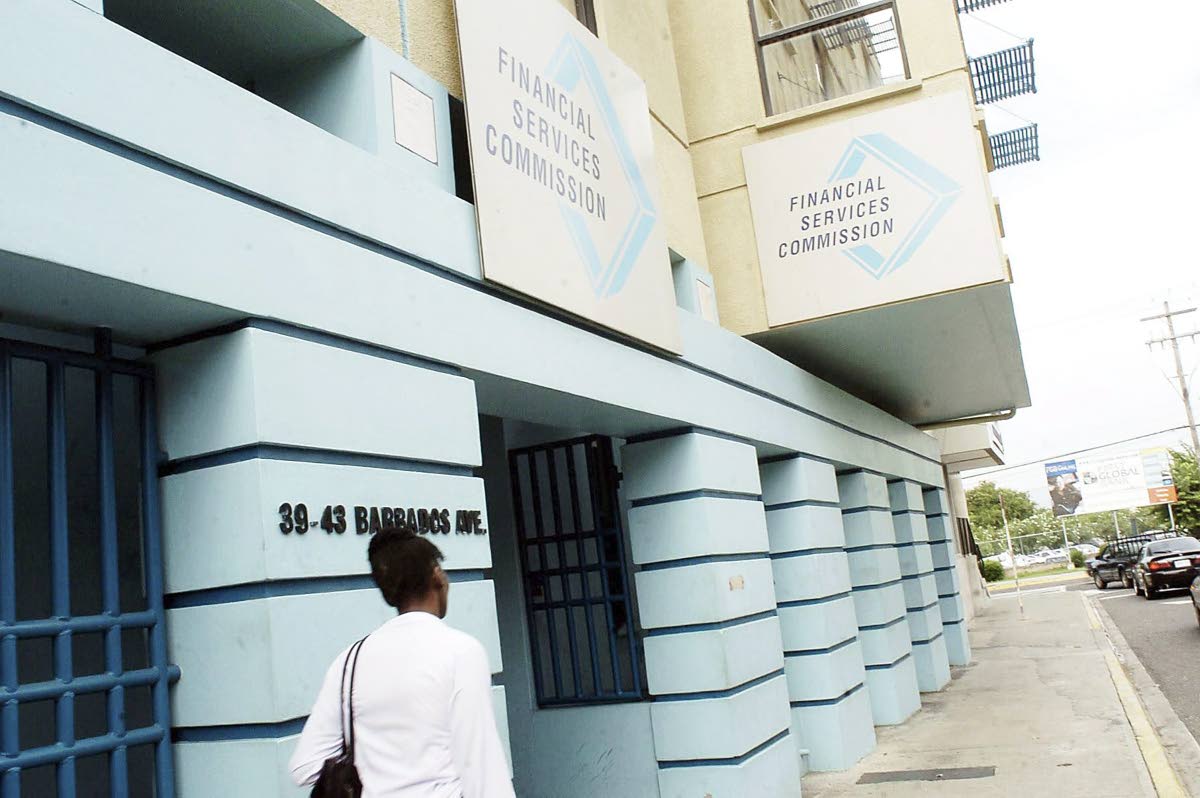 The Financial Services Commission building in New Kingston. Photo - Ricardo Makyn
-
The Financial Services Commission building in New Kingston. Photo - Ricardo Makyn
-
 Ian Allen
Jamaica’s Central Bank, Bank of Jamaica in Downtown Kingston.
Ian Allen
Jamaica’s Central Bank, Bank of Jamaica in Downtown Kingston.
Is the Twin Peaks regulatory model still right, given Hurricane Melissa? This question was raised in an earlier article. Behind it was another: would the outcome for citizens whose properties and income were covered by insurance be in a better or worse financial position, compared to their uninsured colleagues, assuming that framework was in place when the Category 5 hurricane struck? The answer, positive or negative, would be one measure by which the value of that tool could be judged in the context of the regulator’s mission in one of the industries it supervises.
Despite the pedigree of that regulatory instrument which was bequeathed to the country by a former finance minister – someone I hold in high esteem – I concluded in another article, ‘Solar panels, salvage rights, and the struggle for fair hurricane claims’, on February 27, that Twin Peaks is unsuitable. Today, I will explain why.
Section 6 (e) of the Financial Services Commission’s (FSC) statute, the FSC Act, 2001, defines its mission. It says, among other things, “to promote the modernisation of financial services (including insurance) with a view to the adoption and maintenance of international standards of competence, efficiency, and competitiveness for the protection of customers.” The key terms are “modernisation” and “the protection of customers”. The former implies undertaking regular upgrades. The latter: the improvements must benefit consumers. These objectives should be at the centre of the regulator’s strategic and operational plans. The FSC took steps to ensure that the insurance industry complied with international accounting standards, IFRS17 for example, but did not implement and enforce minimum customer service standards.
Twenty-five years after its formation, the commission has still not realised the goals in its statute. Further, the planned adoption of the Twin Peaks model, which was formally developed and introduced in Australia, is now almost three decades old. It was designed to separate regulatory oversight into two distinct ‘peaks’: prudential regulation (safety/solvency) and market conduct regulation (consumer protection/business ethics). Meanwhile, ideas about financial services industry regulation have changed since 1988.
One of the United Kingdom’s financial services regulators, the Financial Conduct Authority (FCA), introduced a newer outcomes-based regulatory approach in July 2022. It is now widely regarded as being more effective for consumer protection than earlier process-oriented regulatory models. Its effectiveness, particularly from a consumer perspective, contrasts with the Twin Peaks model that the UK uses as its overarching regulatory architecture.
FCA’s outcomes-focused regulation
Below are some reasons why outcomes-focused regulation is viewed as superior in certain respects, yet not a complete substitute for institutional frameworks like Twin Peaks.
Emphasis has shifted from prescriptive, process-based compliance (that is, detailed rules about what firms must do) towards outcomes-based supervision, especially under the Consumer Duty framework. The key features of the structure include:
• A Consumer Principle requiring firms to act to deliver good outcomes (or results) for retail customers.
• Four specific consumer outcomes (namely governance, price and value, understanding, and support), which firms must evidence in practice.
• Greater supervisory focus on what consumers experience, rather than just whether rules were followed.
The regulator assesses not only compliance with handbook provisions, but whether actual consumer impacts align with its objectives. Supervisors increasingly use data, metrics, and judgement to intervene where outcomes fall short.
Measures of effectiveness
1. Consumer Protection
• It prioritises real-world consumer harm – poor outcomes trigger intervention, not just breaches of process instructions.
• Measuring and tracking outcomes creates accountability for firms to prove benefits to customers, not merely box-tick compliance.
• It encourages firms to integrate consumer-centric thinking into product design and customer journeys, theoretically reducing systemic harm over time.
2. Regulatory Agility
• Outcomes-based approaches allow flexibility as markets and products change, because expectations rest on results, rather than fixed inputs.
• It can enable earlier action against emerging harm patterns, rather than waiting for specific rules to be triggered by misconduct.
Criticisms and limitations
• Firms often face judgement calls about what constitutes ‘good outcomes’, which can increase compliance burdens and uncertainty.
• Outcomes frameworks may sit atop existing prescriptive requirements, sometimes multiplying complexity rather than reducing it.
The Twin Peaks model
The model is an institutional structure for financial regulation, not a type of rulebook. Regulatory functions are split between two specialised authorities:
1. A prudential supervisor focused on safety, soundness and systemic stability. In the local environment, the prudential regulatory functions will be performed by the Bank of Jamaica, which will supervise deposit-taking and non-deposit-taking institutions.
2. A market conduct and consumer protection regulator responsible for how firms treat their customers. The FSC will discharge these functions. It will supervise
deposit-taking and non-deposit-taking institutions.
The model was implemented in the UK after the 2008 financial crisis and was designed to address the weaknesses of a single, integrated regulator, which existed pre-SSL locally. The designers of the earlier system assumed that systemic risk and consumer protection objectives would receive equal emphasis if both functions were housed under one roof. This did not happen in the case of SSL. Twin Peaks will be introduced into the local financial services industry because of that failure, where the separate regulatory functions will be shared between the BOJ and FSC.
Key characteristics of the structure
• Institutional separation: Prudential and conduct functions are allocated to different bodies.
• Focused mandates: Each authority pursues a clear regulatory mission, that is, stability versus market conduct and consumer protection.
• Framework design: Improves governance, clarity, and oversight prioritisation across the financial system.
Consumer benefits
• A dedicated consumer/conduct regulator (FSC) means consumer interests and market fairness are explicit statutory objectives, not an add-on to prudential concerns.
• By separating the mandates, the new model helps prevent prudential priorities from overshadowing consumer protection, as happened in the insurance industry since the first version of the Insurance Act was repealed in December 2001 and afterwards.
Systemic and market benefits
• Reduces regulatory conflict and clarifies accountability across different aspects of supervision.
• Lessens systemic risk to the financial system by ensuring that prudential supervisors are not distracted by market conduct tasks.
Effectiveness, the consumer perspective
Because consumers’ interests have taken a backseat to prudential regulation during Jamaica’s 50 year insurance regulatory history, this has contributed to high levels of distrust, ignorance, and suspicion about the industry, low levels of insurance penetration and a big disaster risk gap. Evidence of this emerged from the low levels of compliance with the FSC’s 2014 market conduct guidelines by insurers and intermediaries, non enforcement of the rules by the regulator, and, more recently, high levels of non insurance which were evident after Hurricanes Beryl and Melissa. These observations were also confirmed by recent BOJ research findings that “attitudes and trust” in financial services — not access — affect how consumers behave. Twin Peaks without an outcomes based regime like the FCA’s consumer duty or public relations campaigns will not correct these problems.
The inclusion of the consumer duty
• Directly targets harmful experiences and outcomes for consumers.
• Forces insurers and intermediaries to adapt services to what customers receive, not merely what they document.
• Allows the regulator to intervene proactively where evidence shows persistent poor consumer results.
While Twin Peaks enables stronger consumer protection in theory, it does not by itself guarantee good outcomes for consumers unless the regulator actively uses
outcome-based principles in enforcement and supervision.
Small island developing countries like Jamaica that are acutely exposed to natural disasters, some of which are heightened by climate change, must recognise that disaster risk is increasingly being treated by finance ministries in other countries as a material fiscal risk, prompting them to move away from post-disaster budget reallocations and
ad hoc assistance that we are currently seeing. There are important lessons to be learnt from the UK’s experiences with the Twin Peaks model minus the outcome-based principles in enforcement and supervision, and Hurricanes Beryl and Melissa. Twin Peaks alone will not help breach the huge trust deficit in Jamaica’s disaster insurance gap, reduce fiscal risks, and promote resilience at the micro and macro levels.
The Insurance Development Forum (IDF), a group of global development institutions, insurers, reinsurers, and other experts, identified in a 2025 paper 10 items that were essential to closing the protection gap. Regulatory reform was one of them. The IDF also said that promoting insurability should be a standalone goal of the supervisor. I agree.
If you require assistance managing risks or solving insurance problems, Cedric E. Stephens offers free counsel and advice. To obtain information and counsel, please write to the Business Editor at business@gleanerjm.com or contact Mr Stephens directly at aegis@flowja.com. Letters and emails will be edited for clarity and length.