Anglican Church packs out for Caribbean ‘debut’ of Bob Marley Mass
Loading article...
-
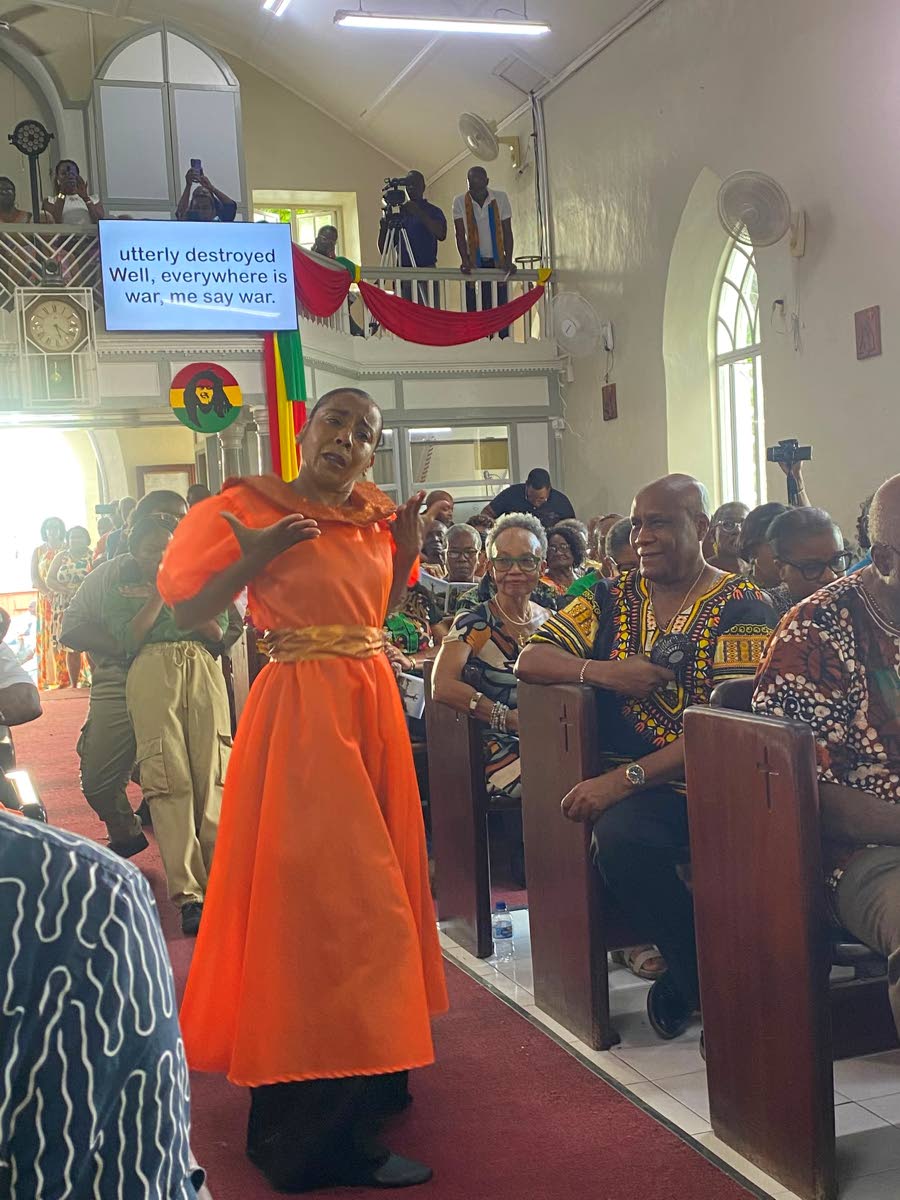 Kim Wiggins dances to one of Bob Marley’s songs during the Marley Emancipation Mass.
-
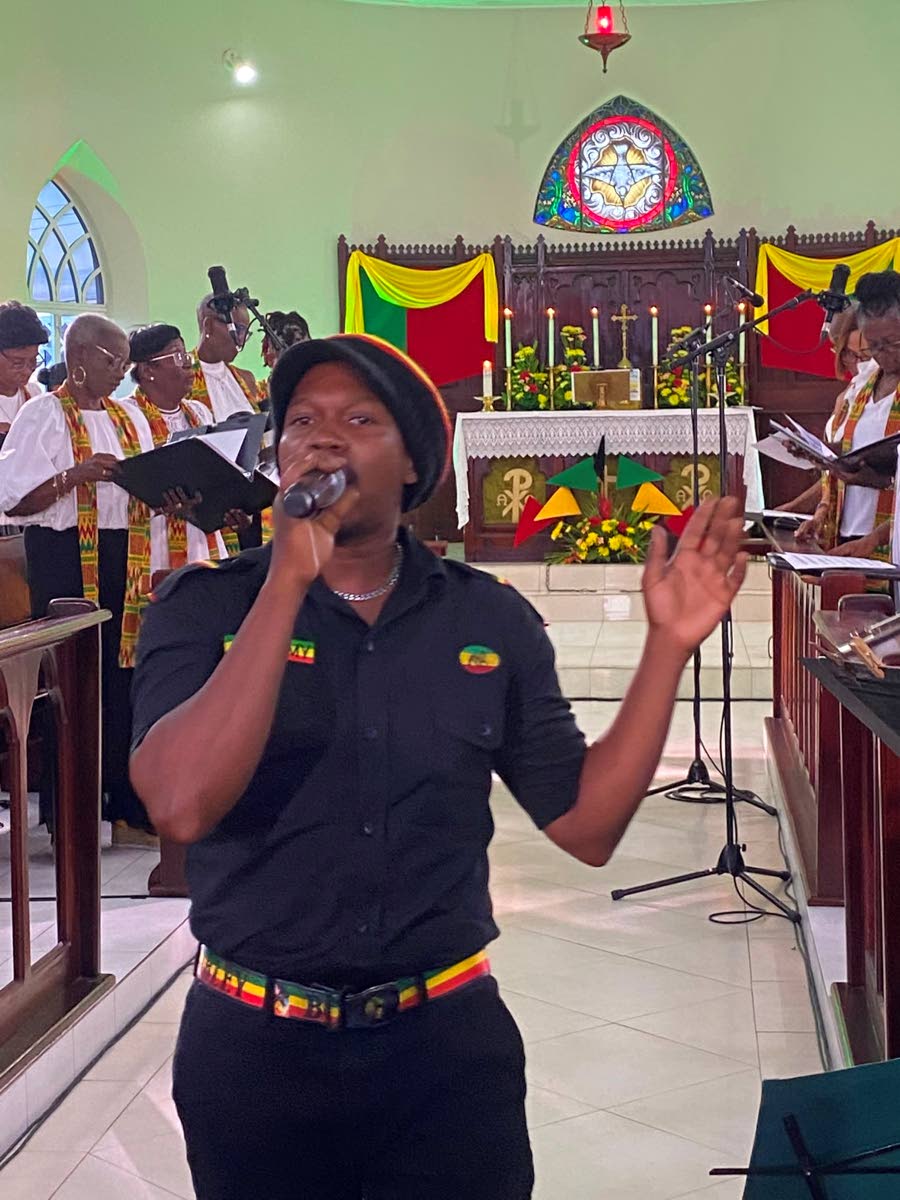 Kweku Jelani performing at the St Barnabas Church during the Bob Marley Emancipation Mass.
-
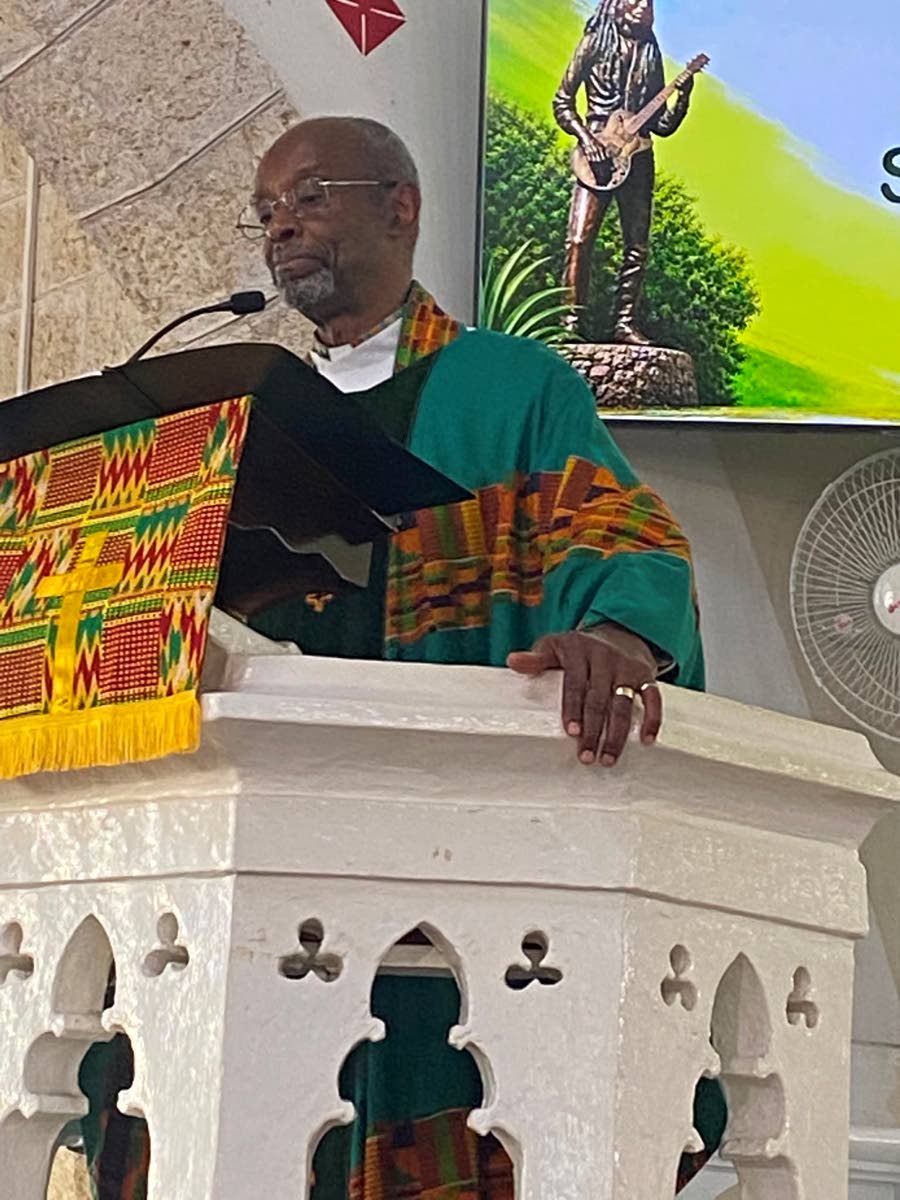 The Reverend Canon Dr Stephen Fields delivering his sermon on Sunday during the Bob Marley Emancipation Mass at the St Barnabas Church in St Michael, Barbados.
-
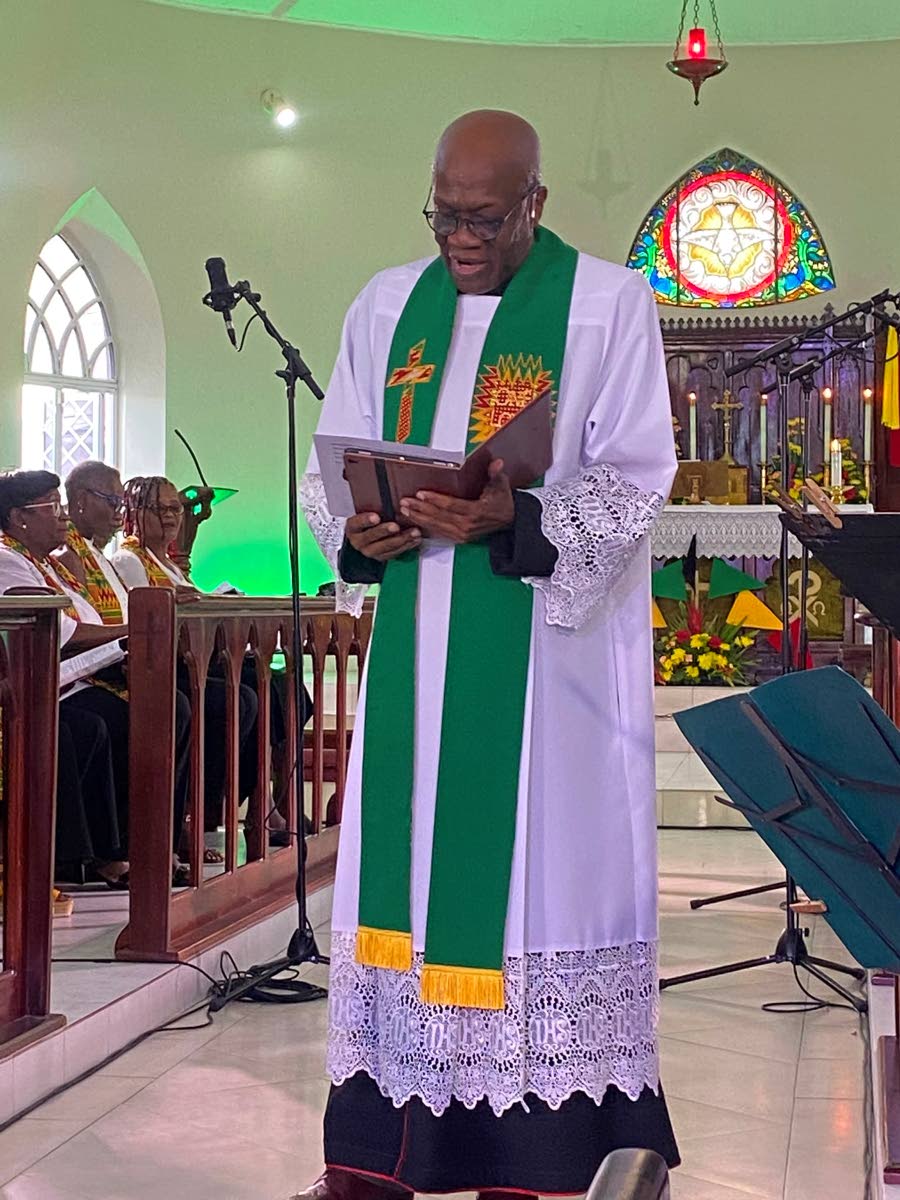 The Reverend Canon Dr Monrelle Williams inside the St Barnabas Church in St Michael, Barbados.
WESTERN BUREAU:
As Rita Marley celebrated her 80th birthday in Montego Bay, St James, on Sunday, an Anglican church in Barbados drew an overflowing congregation for what organisers described as the Caribbean’s first Bob Marley Emancipation Mass.
The service at St Barnabas Anglican Church featured seven of the reggae legend’s best-known songs, including Coming in from the Cold, War, Exodus, Redemption Song, Three Little Birds and Get Up, Stand Up, woven into a specially written liturgy exploring themes of justice, liberation, peace and hope during Barbados’ Season of Emancipation.
The idea for the service came from retired Anglican priest Reverend Canon Dr Stephen Fields, who first conceived the Marley Mass while serving at St James Cathedral in Toronto, Canada.
Fields told The Gleaner that the inspiration struck while he was helping to organise a church service built around the music of Canadian singer-songwriter Leonard Cohen.
“Here I was planning an event about the work of a white composer when Bob Marley has done some amazing music, and much of his lyrics relate to the Bible and the teachings of the church,” Fields said.
“I then said, ‘I want to write a mass that uses Bob Marley’s lyrics and some of his songs’.”
He subsequently wrote the liturgy, carefully arranging Marley’s music to follow the structure of the Eucharist.
As clergy and choir proceeded into the church, worshippers sang Coming in from the Cold. The service concluded with Get Up, Stand Up, which Fields said was deliberately chosen to send the congregation into the world with a renewed commitment to justice and action.
“The music is arranged to flow in a particular way from beginning to end,” he explained.
Although unusual for an Anglican service, Fields rejected suggestions that Marley’s music was too “secular” for Christian worship.
“Who defines what is secular?” he asked.
“His songs are about justice and equity and peace and love and affirmation and dignity and freedom. Those are sacred words.
“If you compare those themes with the teachings of Jesus, they are remarkably similar.”
Fields acknowledged that Marley had “a complex, complicated faith”, but said the church was focusing less on the singer’s personal religious journey than on the enduring message contained in his music.
The current rector of St Barnabas Anglican Church, Reverend Canon Dr Monrelle Williams, who hosted Sunday’s service, said the decision to embrace Marley’s music was rooted in theology rather than celebrity.
“We felt there is a theology embedded in Bob Marley’s music,” Williams said.
“He spoke of liberation. He spoke of love. He spoke of justice. He spoke of peace, and these were themes that Jesus himself emphasised. They are found throughout Scripture.”
Williams said that a careful examination of Marley’s body of work revealed a consistent message that resonated with Christian teaching.
“He speaks a message that we as Christians need to hear as well,” he said.
The idea behind the service was not without controversy.
Rastafarian objections
Williams said the strongest objections came from sections of Barbados’ Rastafarian community, some of whom argued that the Anglican Church, as part of a colonial institution, had no moral authority to interpret or present Marley’s work in a Christian setting.
“They argued that the Anglican Church really did not have the right to use Marley’s music in that way because we are part of the colonial structure and the European structure that Bob Marley was very much against,” Williams explained.
He, however, maintained that the church’s intention was never to reinterpret Rastafari or claim Marley as an Anglican.
“We were not trying to deal with his religion,” Williams said.
“We were trying to take from his music the positive things that can be found there and use them in a different way.”
Despite the criticism, the service proved immensely popular.
Williams said the church was filled beyond capacity, forcing additional worshippers to sit under tents outside while following the service on screens.
“It was well received, really well received,” he said. “People were saying we need to do it again.”
The Barbados staging follows the inaugural Marley Mass held in Toronto last year, where Fields first introduced the liturgy. Sunday’s service marked its Caribbean debut as Barbados continues activities marking its Season of Emancipation ahead of Emancipation Day on August 1.
janet.silvera@gleanerjm.com